Special Situations
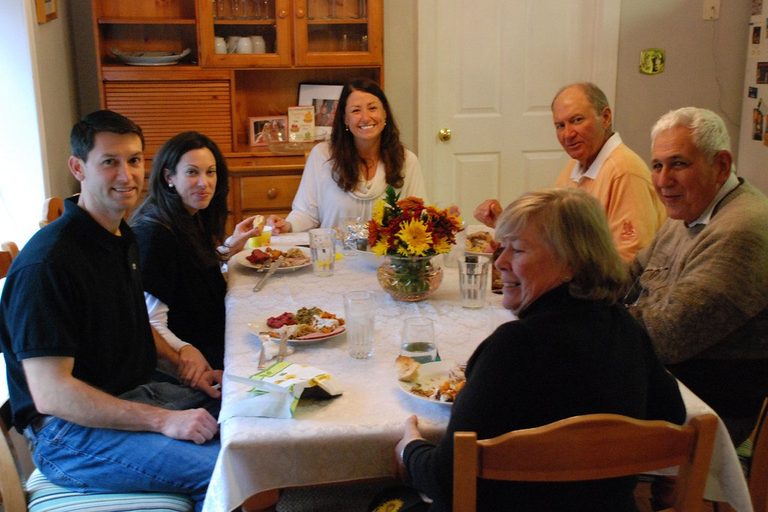
Meeting a New Partner's Family Over the Holidays
Learn when your child should join a holiday visit with a new partner's family, and how to prepare them, plan the day, and protect their traditions.

Supervised visitation center closed on Christmas? Learn how to confirm the closure, check your order, explore alternatives, and keep records.
Best for the Children Editorial·8 min read·November 26, 2026
Christmas is a month away. The school calendar is on the fridge, and you're trying to plan around Halloween and Thanksgiving. Then you notice the supervised visitation center's holiday schedule: closed on Christmas. Your child's visit falls on that day. Here's what to do. Contact the center, confirm the closure, and ask about another supervised appointment. Don't assume the closure lets the visit go ahead without supervision, or with a different supervisor. Then check your order, keep a record, and help your child through the change.
Your first call goes to the center. Confirm that it really is closed on the day of your visit, and ask whether it can offer another supervised appointment close to that date. Do this early. Waiting until mid-December leaves fewer options.
A closure doesn't change what your court order says. If the order requires supervision, a closed center doesn't make an unsupervised visit allowed. It also doesn't let a grandparent, a friend, or a different agency take over automatically. Read the order alongside the service agreement you signed with the center. The Supervised Visitation Network's professional standards expect parents to follow the court order, the program's policies, and that service agreement. These are standards for providers, not a national custody law, but most centers work this way.
Check what your order actually provides. A supervised visit means someone oversees the whole time a parent and child spend together. A supervised exchange usually covers only the handoff between parents. If your order calls for a supervised visit, moving the pickup to a different place doesn't give you supervision for the rest of the visit.
What comes next depends on three things: your order's wording, what services are available, and how your local court handles changes. No single answer fits every family.
Before you call or email, write down what you need to learn:
Centers handle this very differently. In Ohio, for example, the Greene County Family Visitation Center publishes its calendar. It lists closures on December 24 and 25, 2026, and says it may be able to offer rescheduled holiday time. Its parent handbook draws a useful line: visits a parent cancels won't be rescheduled, but when the center closes for a holiday or another disruption, it will try to reschedule.
A provider in New York, Rockland Youth Empowerment Center, takes another approach. It advertises reserved supervised visitation during regular federal-holiday closures. Even so, its page doesn't promise that any particular Christmas slot will be open.
These are two examples, not national policy. Ask your own provider what it offers.
If the center can't help on the date you wanted, there are other options worth asking about:
Each option has to fit your order, and the provider has to agree it's suitable for your family and have room to take you. A relative isn't automatically an acceptable supervisor. An ordinary FaceTime call isn't the same as an ordered supervised visit, even if it feels close enough.
A new provider will probably want paperwork before agreeing to anything. For the Sake of One, a provider in Texarkana, Arkansas, says scheduling starts with a copy of the court order and that an intake appointment comes before any visits. Expect something similar elsewhere and plan for the extra time. This is one more reason to start now, not the week before Christmas.
When you talk to any replacement provider, ask:
SVN's standards call for providers to pay attention to safe arrivals and departures in high-risk cases, and to have written policies on gifts, visitors, food, and recording. A good provider will answer these questions clearly.
A provider offering you a new time slot isn't the same as a court approving a change. The center can only offer what your order already allows. If the only workable option is something the order doesn't cover, such as a different supervisor, a different format, or a different date range, you may need court involvement.
Texas shows how this can work. TexasLawHelp explains that a parent can ask a judge to change an existing visitation order by filing a modification case, and its guide includes a motion for temporary orders to ask for changes while the case is pending. It also warns that choosing not to follow a Texas visitation order can lead the other parent to seek enforcement. That doesn't mean a center closure is automatically a violation. It does mean you shouldn't make up your own fix. Other states use different forms, names, and timelines.
For the right procedure where you live, contact your family lawyer, a legal aid office, or your court's self-help center. Ask them one clear question: is the holiday change we want already allowed under our order, does it need an agreed order signed by the judge, or do we have to file a request with the court?
Don't count on an emergency hearing, a particular result, or automatic makeup time. Courts vary, and December dockets fill up. That's another reason to ask in October rather than late December.
Keep copies of:
Ask the center how it will record a cancellation that it caused. Greene County's handbook, for example, says its records include attendance, observations, and concerns. You want the record to show the center closed, not that a parent didn't show up.
These records aren't proof that you're legally excused from anything. They're simply a clear account of what happened.
If you and the other parent are allowed to contact each other, keep it short and neutral. Suggested wording:
> "The center has confirmed our appointment cannot take place because it is closed. Please let the center know which permitted replacement times you can attend."
If direct contact is restricted, don't send this yourself. Go through the center, your lawyers, or whatever channel your order allows. SVN's standards call for arrangements that prevent contact between parents in high-risk cases, and those arrangements stay in place over the holidays.
Your child will probably notice something has changed before you say anything. Children usually pick up the tension around a lost visit even when adults think they're hiding it. From what children have told us over the years, a vague answer or silence often worries them more than the truth.
Keep it simple and honest. Suggested wording:
> "The visit center is closed for Christmas. The adults are working on the next safe visit. This is not your fault."
Then let them react. Disappointment is normal, so acknowledge it rather than rushing to fix it. The American Academy of Pediatrics advises parents to explain changes simply, listen to children's concerns, avoid blaming the other parent, and keep adult disagreements private. Only give a new date once it's confirmed. Promising a date that then falls through hurts more.
Keep the rest of the holiday familiar: the usual meals, bedtime, and traditions. Both pediatric guidance and supervised-visitation materials say predictable routines help children feel secure.
If a replacement visit is approved, keep it modest. Reading a favorite book together or exchanging an approved card can mean more than a pile of presents.
For next year, and for Thanksgiving this year:
Learn when your child should join a holiday visit with a new partner's family, and how to prepare them, plan the day, and protect their traditions.
What the Hague Convention can and can't do when a parent takes a child abroad, who decides custody, and the first steps to take.
Learn what to check when the other parent moves or plans to move with your child during a custody case, and how to get legal help quickly.