
Preparing for Court
How social media posts get used against parents in custody cases
Learn how posts, photos and messages get used in custody cases, why deleting can backfire, and how to protect your child while the case is open.
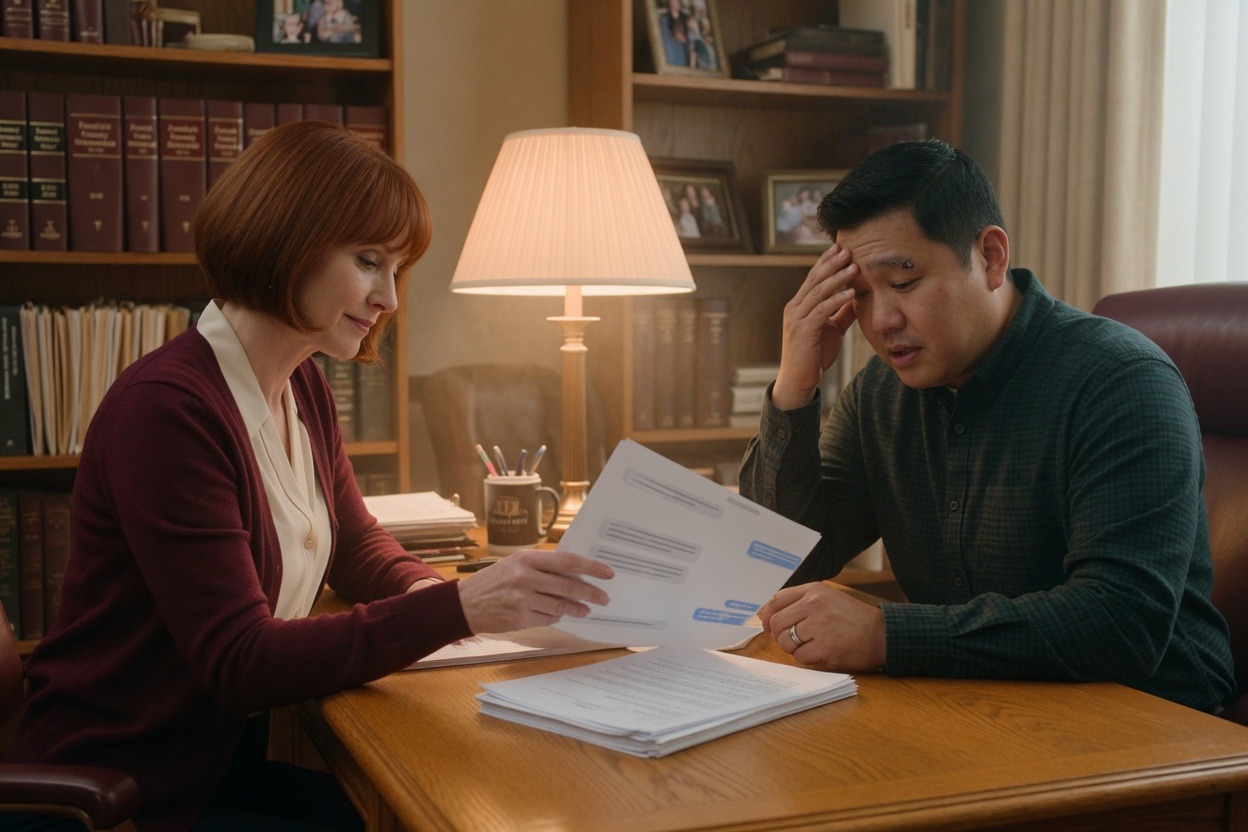
Can texts be used in a custody case? Learn the three tests judges apply: authentication, hearsay, and whether the messages were obtained lawfully.
Best for the Children Editorial·10 min read·October 14, 2025·Updated October 13, 2026
You scroll back through months of texts with your co-parent and stop on the one you've reread a dozen times: the threat, the insult, the "you'll never see them again." Can a family court judge actually see it? Usually, yes. Texts are common evidence in custody cases. But a judge will only consider one if it clears three hurdles. You have to prove who wrote it. It has to get past the hearsay rule. And you have to have gotten it lawfully. Here is how each test works, and how to prepare your messages so they hold up.
Custody courts decide cases by asking what is best for the child, and texts can show a lot about that. Texas is a clear example. Texas Family Code § 153.002 says: "The best interest of the child shall always be the primary consideration of the court" when deciding conservatorship (the Texas term for custody) and possession and access.
Texas law also names specific things a judge weighs, and texts can speak directly to them:
Texas also gives parents an edge in disputes with non-parents, such as grandparents. A parent is presumed to act in the child's best interest. A non-parent can overcome that only with clear and convincing evidence that denying them relief would significantly impair the child's physical health or emotional development.
Other states use their own statutes and wording, but best interest is the common thread. A text matters only as far as it shows something about the child's welfare.
A printout or screenshot with your ex's name at the top does not prove itself. Before a judge considers a message, someone has to show it is what you say it is. This step is called authentication.
Family courts apply their own state's rules of evidence. Many states model those rules on the Federal Rules of Evidence, so the federal rules are a useful guide. The details still vary by state.
Federal Rule of Evidence 901(a) requires the party offering an item to "produce evidence sufficient to support a finding that the item is what the proponent claims it is." The rule lists ways to do that. Two of them cover most text messages:
Two state examples show how this plays out:
Massachusetts. A name on a message is not enough by itself. Courts look for "confirming circumstances" showing who actually wrote it. That principle comes from Commonwealth v. Purdy (2011), a case about emails. The Massachusetts Guide to Evidence also eases some burdens. You do not need an expert witness, and you do not need to prove that only the other parent had access to their phone. A copy such as a screenshot, together with testimony or an affidavit that it is accurate, can be enough. The copies should show the date and time of each message and the sender's contact information, ideally a phone number, not just a saved contact name.
New York. In People v. Rodriguez (2022), New York's highest court held that screenshots of text messages were authenticated by the testimony of a person who took part in the conversation, even though that person did not take the screenshots. The court treated screenshots like photographs. Anyone with personal knowledge of what they show can vouch for them.
Authentication proves who wrote a text. It does not, on its own, get the text admitted. The hearsay rule is the next hurdle.
Hearsay is an out-of-court statement offered "to prove the truth of the matter asserted" (Federal Rule 801(c)). Text messages are out-of-court statements, so this rule can apply. Whether it blocks a particular text depends on who wrote it and who is offering it.
A lawyer can explain how your state handles these situations and which exceptions might apply.
Texts sent directly to you are the safest evidence you can have. Trouble starts when parents go looking for messages that were never meant for them.
Intercepting messages can be a federal crime. The federal Wiretap Act, 18 U.S.C. § 2511, prohibits intentionally intercepting electronic communications. It also prohibits using or disclosing their contents if you know they were intercepted unlawfully. The penalty is up to five years in prison, a fine, or both. The law has an exception for a person who is a party to the communication or who has one party's consent. That exception disappears if the purpose is to commit a criminal or tortious act.
Breaking into stored messages is covered too. Getting into the other parent's phone or cloud account without permission to read saved messages is generally addressed by a separate law, the Stored Communications Act (18 U.S.C. § 2701).
Will the judge exclude them anyway? That is less certain than many people assume. A federal law, 18 U.S.C. § 2515, bars illegally intercepted communications from being used in any court, including state courts. But its text covers wire and oral communications, which means phone calls and in-person conversations. It does not cover electronic communications such as texts. Whether a judge throws out improperly obtained texts therefore depends on state law and the judge's discretion. The bigger problem is not admissibility. You could face criminal or civil liability, and a judge is unlikely to view a parent who snooped favorably when weighing the child's best interest.
You may assume you can read anything on your minor child's phone, including their conversations with the other parent. The law here is less settled than that.
Courts addressing this have used a doctrine called "vicarious consent," under which a parent consents on a child's behalf. It began with a federal appeals case, Pollock v. Pollock (6th Cir. 1998). The court required the parent to have a good-faith, objectively reasonable belief that the action was necessary for the child's best interests. It also warned that parents cannot record any conversation they like just by invoking best interests. The child's age and maturity also matter.
In 2016, New York's highest court adopted that test in a 4–3 decision. It allowed a father's recording of his child's conversation, but required the same good-faith, objectively reasonable belief. Curiosity, or a wish to gather ammunition for a custody fight, does not qualify.
Those cases involved recorded phone calls, not text messages saved on a phone. How they apply to reading a child's texts is not clear-cut. In our view, one practice carries the most risk: asking your child to copy, forward, or screenshot the other parent's messages. It brings your child into the dispute, and that alone can count against you in a best-interest analysis.
Once you know your messages are lawfully yours, presentation matters. Some of these steps come from the authentication rules above. Others are simply good practice.
Text messages can be used in a child custody case, and the other parent's own words are often some of the most persuasive evidence a judge sees. To count, they must be authenticated as coming from that parent and offered for a purpose the hearsay rules allow. They should also be messages you received or obtained lawfully, not ones you intercepted, hacked, or had your child collect. Evidence rules differ from state to state, so a family law attorney in your state is the best guide to how your particular messages will be treated.
Related: Talking to Your Child About an Upcoming Court Date
Learn how posts, photos and messages get used in custody cases, why deleting can backfire, and how to protect your child while the case is open.
Disagree with a Guardian ad Litem report? Learn how to respond with evidence, question the GAL where allowed, and what the judge decides.
Learn how a 50/50 custody presumption changes the court's starting point, who must rebut it, and why your child's best interests still decide.