Parenting Time & Schedules
When the Other Parent Cancels a Holiday Visit at the Last Minute
Learn what to tell your child, how to check your order, and how to document a last-minute holiday cancellation and handle make-up time.
Child has a fever on handoff day? Learn what to document, how to tell the other parent, and when a sick-day pause is justified under your order.
Best for the Children Editorial·8 min read·November 24, 2026
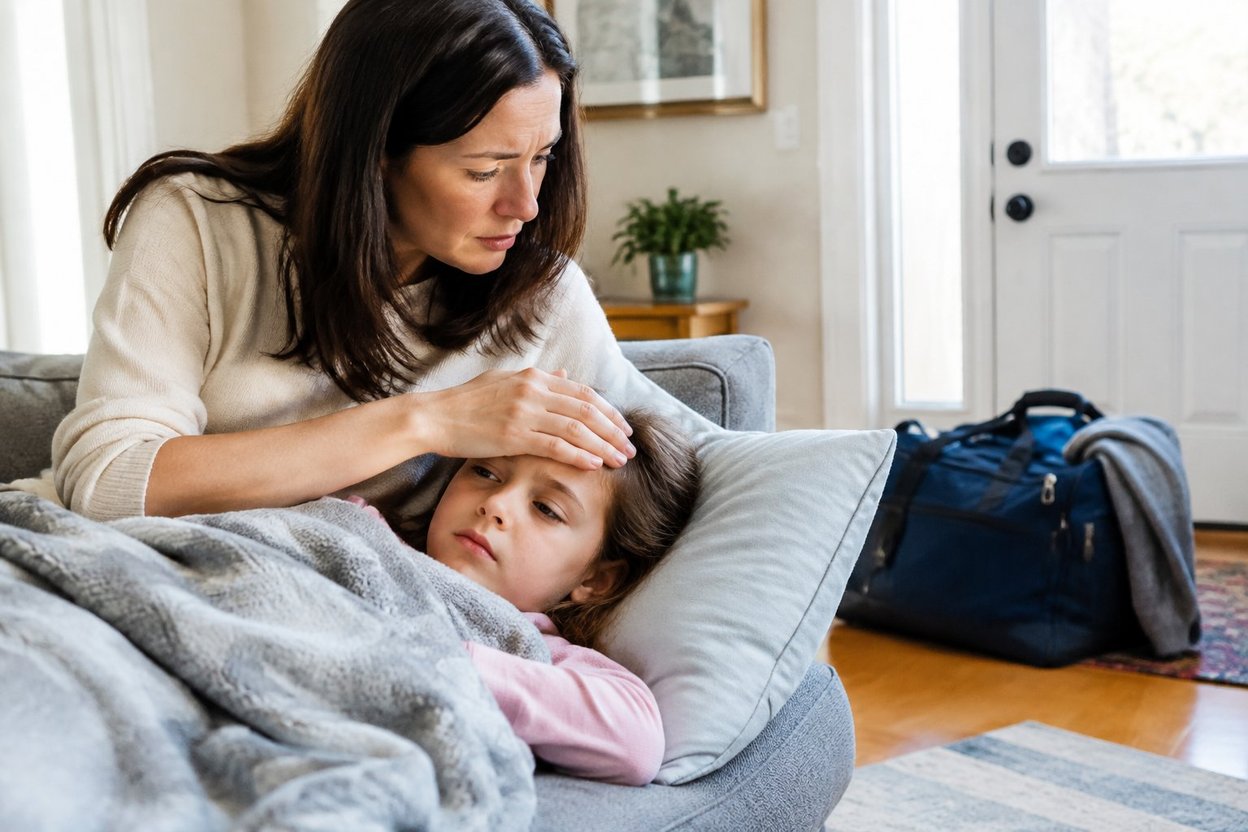
It's Thanksgiving morning, the bags are by the door, and your child feels hot. The thermometer says 101. In a few hours your child is due at the other parent's home for the holiday. Put your child's health first. Take the temperature and write it down, call the pediatrician, and do what they tell you. Then let the other parent know right away and offer to make up the lost time. Your order still applies on a sick day, so how you handle the pause matters.
Start with the facts. Take your child's temperature, write down the reading and the time, and watch for any other symptoms. A Pennsylvania family-law firm suggests photographing the thermometer reading. It's a small step, and it means nobody has to take your word for the number later.
Next, call the pediatrician or the after-hours nurse line and follow their advice. That call is mainly about your child's health. It also creates a record. Another Pennsylvania firm, writing about custody during COVID-19, noted that calling the doctor gives "objective evidence that you were concerned" if the other parent later goes to court.
A real illness that you've documented and checked with a doctor is the strongest reason there is to pause an exchange. "He seemed tired" is weak. "102.3 at 7:40 a.m., the nurse line said to keep him home and give fluids, rechecking at noon" is something both homes and a judge can understand.
Keeping your child home today doesn't suspend your parenting order. It just means you're handling one exchange differently, and the other parent and your child will both feel how you do it. The rest of this article covers how to make that call and how to handle the pause well.
The American Academy of Pediatrics gives clear guidance on when to call the doctor:
Call right away at any age if your child looks very ill, is unusually drowsy or very fussy, or has a stiff neck, trouble breathing, an unexplained rash, repeated vomiting or diarrhea, or a seizure. The same applies if your child has a weakened immune system.
For school, the CDC says a child can go back after at least 24 hours without a fever and without fever-reducing medicine. It also says a child who vomits more than twice in 24 hours should stay home. Many families use the same rules for travel between homes. Local school and daycare rules differ.
If a doctor says your child needs rest or care at home, that settles the "is this serious" question for both parents. Neither of you has to argue about it.
Don't wait until pickup time. Send the message as soon as you know, and put it in writing (text, email or your co-parenting app) so there's a record with a time on it. Keep it short, calm and factual:
> "Maya woke up with a 101.8 fever at 6:30. I called Dr. Lee's office at 7; they said keep her home, fluids, recheck in the afternoon. I'll update you by 2 p.m. Want to video call her before lunch? I'd like to set up make-up time with you."
Leave out blame, side comments and any hint that the other home caused the illness. Offer video calls. Say when you'll send the next update, then send it on time.
Orders and sample plans that do cover illness usually follow a few patterns. Some say a sick child stays with one parent. Some say the parent who had the child the night before cares for them the next day. Some require any change, including make-up time, to be agreed in writing.
Be ready for the other parent to say, "Kids get sick at my house too." That's true, and the other home may be able to take good care of a sick child. Still, when the doctor says to rest at home, that's what's best for your child today. The argument works in the other direction as well. A Pennsylvania firm notes that courts generally aren't persuaded by "the child can be sick at either home" as a reason to withhold a child. A vague worry isn't a reason to keep a child back. A doctor's advice to rest is.
Read the order before you assume anything. Many say nothing about illness. Others have a clear clause. In practice, the answer usually comes from your own order and local rules, not from one statewide law, and the rules vary a lot:
These are sample forms, local guidance and lawyers' commentary, not rules for the whole country. Where there's no illness clause, the usual default is to follow the schedule unless you both agree in writing to change it. An illness you've documented looks very different from a vague excuse, but no one can promise how a particular judge will see it. Check your own state's rules and your own order, offer make-up time, and get the agreement in writing. To see the whole year at once, build a calendar that merges your parenting schedule with your school's calendar.
Don't just offer make-up time in general terms. Suggest specific dates: "This Saturday 10 to 6, or Sunday overnight?" The Oregon sample plan sets make-up time within a week, and the time is lost if the other parent doesn't use it. One Pennsylvania firm says a parent who loses time to illness will likely get make-up time later, probably matching what was missed, though courts decide case by case. The Pennsylvania attorney's advice is simple: "the more you give, the more you get."
Look for options in between. If your child is well enough, the other parent might visit for an hour, bring a plate of Thanksgiving dinner, or come back for a short stay once the fever breaks. The same Pennsylvania attorney suggests letting a child with a fever "rest until they are up for travel," so a late-afternoon handoff may be possible after all.
Think about what the holiday looks like to your child. A sick child may worry that they've ruined the day or let the other parent down. Set up a video call at dinner. Save a small tradition for the make-up visit, like pie, a movie, or carving the pumpkin that didn't get carved on Halloween, so your child knows the holiday has been moved, not lost.
If fevers keep landing on the other parent's days, or a single sick day turns into a long argument, keep calm records. Write down temperatures, doctor calls, messages and make-up time offered and taken. If you need more than the call log, ask the pediatrician for a short note.
If you can't agree, try mediation, or ask the court to add a clear illness clause to your order. A local family lawyer can tell you how judges where you live usually handle it.
In our years in and out of family court, we've seen how much less the missed handoff upsets a child than the fighting over it. A sick child needs rest, comfort, and two parents who aren't arguing over them.
Learn what to tell your child, how to check your order, and how to document a last-minute holiday cancellation and handle make-up time.
See how custody orders split New Year's Eve and New Year's Day, what to check in your order, and how to keep the night calm for your child.
When weather delays a custody exchange, learn who loses holiday time, how to document good faith, and how to make up missed parenting time.