Parenting Time & Schedules
When the Other Parent Cancels a Holiday Visit at the Last Minute
Learn what to tell your child, how to check your order, and how to document a last-minute holiday cancellation and handle make-up time.
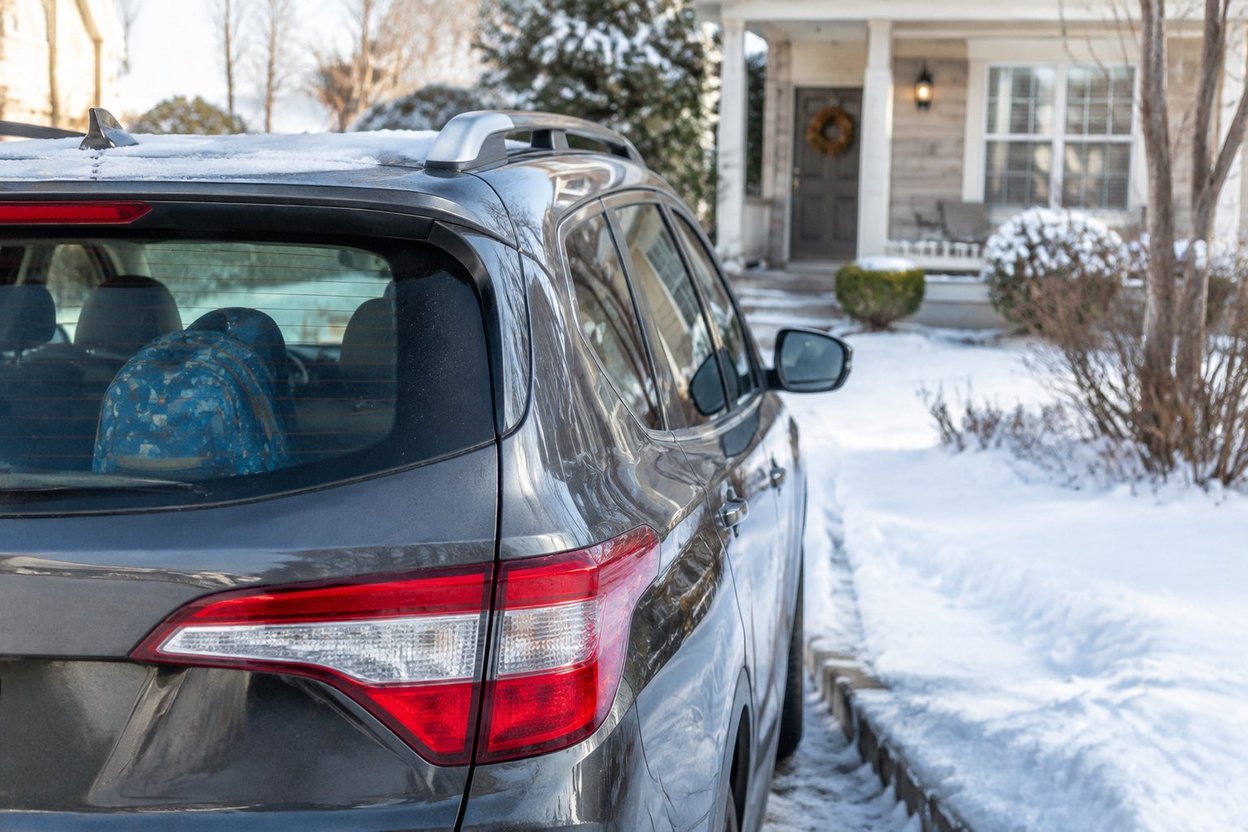
When weather delays a custody exchange, learn who loses holiday time, how to document good faith, and how to make up missed parenting time.
Best for the Children Editorial·9 min read·November 21, 2026
The forecast changed overnight. Your child's bag is packed, the handoff is set for noon on the holiday, and now the highway is glazed with ice and the school district has already cancelled tomorrow. You're asking whether you should drive and whether the time is lost if you don't. Ideally, neither parent loses it. A delay for real safety reasons should move the time to later, not take it away. How you handle the next few hours decides whether that's how it ends up.
Your custody order or parenting plan controls first. No rule across all states hands weather-delayed time to one parent or the other. What courts and practitioners keep returning to is good faith.
When travel really is unsafe, a parent's good-faith choice not to drive the child is likely to be supported. That's the view of family law firms in Virginia and Connecticut. One Virginia firm adds that you need a strong, documented reason. Many plans and many fair-minded parents then add make-up time so the other parent doesn't simply lose the holiday.
The other side matters just as much. A make-up parenting time policy from a Michigan county court (Menominee) lists "The weather was bad" among the reasons for denying parenting time that are "generally NOT ACCEPTABLE." These two views fit together. A parent who delays an exchange because of documented danger is in a very different position from one who keeps the child and points out the window.
Think about how it looks to your child. Children notice everything around an exchange, including the tone of the phone call, the waiting, and which parent sounds angry. A delay can feel to them like a pause. A cancellation can feel like losing a holiday with someone they love. Your job is to keep it a pause.
Before you decide anything, read your order. Look for three things:
The exact wording carries a lot of weight. A clause that says visits may be cancelled for inclement weather works very differently from one that says the exchange moves to the next day. If your plan has a backup time and place, follow it. A New Jersey firm puts the default plainly: if there's no weather clause, parenting time goes on as scheduled unless both parents agree to change it.
Being silent about weather doesn't make the order optional. Courts often separate a parent who is careless or unlucky from one who defies the order on purpose. One Virginia firm calls bad faith "the key line" for punishment. Contempt usually also needs an order clear enough that you knew what it required. If yours is vague, for example "reasonable holiday time" with no hours or place, either parent can ask the court to clarify it. That's a lot easier to do in October than in the middle of a December storm.
Use objective signals, not preference. Base the call on facts other people can check: school closures, official road and travel advisories, closed highways, severe-weather warnings. "I didn't feel like driving" won't hold up. "The state closed the interstate at 10 a.m." will.
Message the other parent early. As soon as a closure or warning is announced, call or text. Don't wait until twenty minutes before the exchange. An early message shows good faith and gives the other parent time to plan.
Offer a safer alternative, not just a no. Try one of these:
Put the agreement in writing. A phone call is fine for working it out. Then send a short text or email that confirms it: "Confirming we're moving pickup to 10 a.m. Saturday at the usual place because of the ice storm. Thanks." A Virginia firm stresses that what matters later is proof that both parents agreed.
Keep a simple record. Write down the scheduled exchange time, the actual exchange time, and save the messages between you. Note what you knew, when you knew it, and where it came from, such as a screenshot of the school closure or the road advisory. If your home was the safer place, for instance because it had a generator during an outage or could meet a child's medical need, write that down too. One Connecticut firm sums it up: "Document all weather-related delays or cancellations."
While all this is going on, keep the adult conversation away from your child. Tell them what's happening in a calm sentence or two: "The roads are icy, so you'll see Dad tomorrow morning instead of today." If a video call is possible, let them have it.
Once the roads clear, the question becomes whether the missed time comes back.

Make-up time isn't automatic in every case. One Virginia firm points out that you aren't always required to offer it. A single-day slip might not need any, while a longer disruption usually does. Still, offering make-up time is the good-faith move and very often the fair one. An Ohio-based article suggests that the parent who had the children offer other time so the other parent "is not missing out on any time with the children."
The best rule of thumb is like for like. Swap a holiday for a holiday and a weekend for a weekend. A Thursday evening doesn't replace Christmas morning. Some examples:
Whatever you agree on, write down the date. "We'll make it up sometime" tends to fade away, and your child is the one who ends up losing it.
Courts look at patterns. A Virginia firm notes that occasional, well-documented decisions in extreme conditions are less likely to draw court action, while frequent changes attract "attention and suspicion." If weather comes up every time it's the other parent's holiday, a judge will notice.
What about a storm that was forecast and never came? According to the same Virginia firm, if the order says nothing about weather, the question is whether keeping the child was reasonable, made in good faith, and in the child's best interest, based on what you knew at the time. Your record of advisories and closures is what answers that.
If a court finds bad-faith violation, the consequences can include court-ordered make-up time, the other parent's attorney's fees, or contempt sanctions. A Virginia firm lists fines, community service and, sometimes, jail. In Michigan, the county policy lets a parent bring a complaint to the Friend of the Court, which may decline complaints filed more than 56 days after the violation. Deadlines and procedures differ by state and county, so check yours.
Before going to court, try mediation, or ask the court to clarify the order. Either one usually costs less and is quicker.
Through all of it, your child should never be the messenger, never hear that a parent "stole" Christmas, and never be asked whose fault the snow was.
It's fall. Halloween is a couple of weeks away and Thanksgiving falls on November 26 this year, so there's still time to fix the plan before the first serious storm. A good weather clause covers:

The New Jersey firm suggests the plan also cover snow days, delayed openings, remote school days and early dismissals. A Connecticut firm suggests longer visits in safer weather and video calls when storms hit. Rules differ from state to state, so have the language checked against your own state's law. Then if a storm hits on a holiday, you can follow the clause and keep your child out of the argument. When school days off land on the other parent's week, our calendar builder shows it before it becomes a surprise.
Learn what to tell your child, how to check your order, and how to document a last-minute holiday cancellation and handle make-up time.
See how custody orders split New Year's Eve and New Year's Day, what to check in your order, and how to keep the night calm for your child.
Plan a calm first Christmas after separation: what children need, how to set the holiday schedule early, and what to do if you can't agree.