Putting Children First
When the Other Parent's New Partner Buys Your Child an Expensive Gift
When your co-parent's new partner gives your child a costly gift, learn what to let go, when to speak up, and how to keep your child out of it.

Learn how to agree on a Christmas gift budget with your co-parent, split the wish list, and handle gift competition without hurting your child.
Best for the Children Editorial·8 min read·November 20, 2026
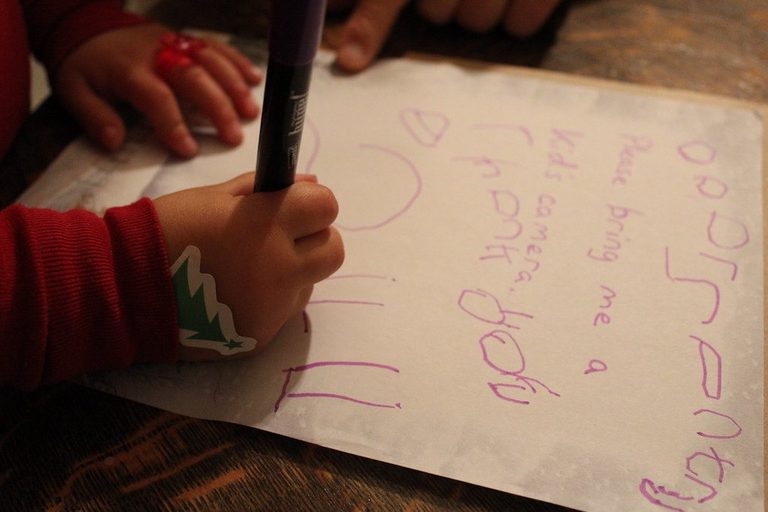
It's mid-October and the toy ads have started. Your child has mentioned the same gaming headset three times, and you're already wondering what the other house is planning to buy. Here is the short answer: no court sets a right amount for each parent to spend. What works is a budget the two of you agree on, with a total close to what you spent as one family and roughly equal gifts from each home. The rest of this article covers how to set that budget and what to do when the other parent spends more.
Parenting plans and custody orders deal with where your child sleeps on Christmas Eve, who drives, and how the holidays alternate from year to year. They almost never say what each parent spends on presents. We know of no general rule that sets a per-parent gift amount, and family law firms that write about this treat it as something parents work out between themselves. Read your own order to be sure, because a few parents did write gift terms into theirs. To see what the order means day by day, build a calendar from your parenting schedule and your school's calendar.
Without a rule, the practical answer is a shared budget that both of you can keep. An Illinois family law firm suggests a simple starting point: aim for a combined total close to what the family spent before the separation. Each parent buys fewer gifts, but your child's Christmas stays about the same size.
From there, aim for similar numbers of gifts with similar values from each home. Exact matching isn't the goal. The goal is that neither house looks like the "real" Christmas. The same firm puts it bluntly: "It is unhealthy and unfair to compete for your children's affection with gifts."
Children notice far more than adults think, and they notice what's under the tree. They count the boxes and compare. They feel it when one parent asks, "What did your dad get you?" or "Was your mom's bigger?" When gifts turn into a contest, your child ends up as the scorekeeper. That's one more place in the middle they never asked to stand in.
Gifts also can't make up for time with each parent. The Illinois firm says it well: "The most important Christmas gift you can give your children is the ability to spend time with both of you."
There's also a cost later on. A parent who sees the child less can feel guilty or unsure of their place, and Money Management International notes that this often leads to overspending. Going overboard one year sets expectations your child will count on the next year and the year after that, whether or not anyone can afford it.
Talk before anyone shops. Early November, well before the Thanksgiving weekend sales, is a good time. Have the conversation before Black Friday, not after.
Start with last year. Look at what you actually spent, not what you meant to spend. TalkingParents suggests ranking each child's wish list, leaving a cushion for costs you didn't plan for, and thinking about low-cost experiences as well as things to unwrap.
Compare wish lists and avoid buying the same thing twice. Share the list your child gave each of you and agree on who buys what. Two identical headsets mean one gets returned and one awkward explanation.
Pick a way to split the list. Common options:
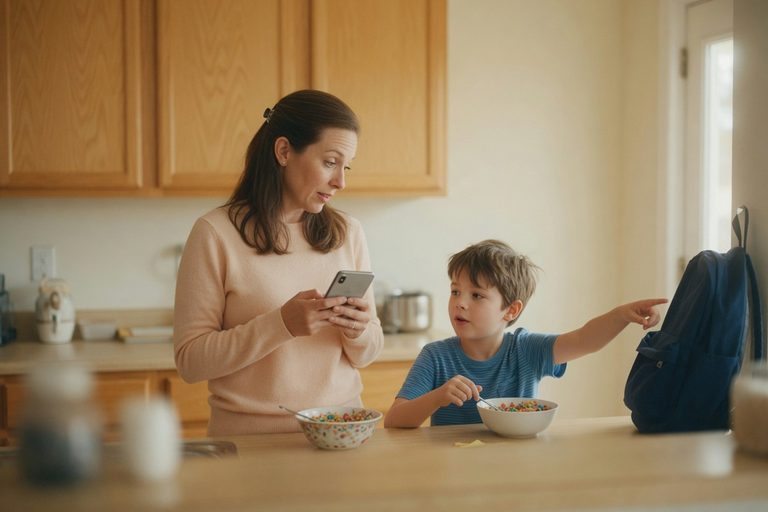
Put it in writing. A short message or a note in a co-parenting app such as OurFamilyWizard does the job. If talking directly is hard, a shared calendar such as Google Calendar or Cozi can track who's buying what with less back-and-forth. TalkingParents calls this kind of gift and expense coordination "vital."
For context, not as a target: the National Retail Federation's 2025 survey found people planned to spend an average of about $890 each on the holidays, with about $628 of that on gifts for family and friends. That figure covers everyone on a shopping list, not one child. Treat it as a picture of the pressure parents feel, not a goal. TalkingParents cites a NerdWallet survey that found almost half of parents of kids under 18 felt pressure to go over their budgets. Your number should come from your two households, not from a national average.
Incomes often differ after a separation, and an equal-dollar rule can be unfair to the parent with less. Some co-parents agree on a cap that the lower-income parent can manage, so both homes look about the same to the child. Others agree on a total and split it in proportion to income.
Two rules help, whatever the money looks like:
If the other parent is clearly competing, raise it privately, never through your child or in front of them. Talk about what it does to your child, not about what it says about the other parent.
Some years nothing changes. Then focus on what you control. Keep your own house rules steady. Tell your child ahead of time that each home has its own traditions and its own way of doing Christmas, and that both are fine. Don't let your frustration land on them. Low-cost traditions give your child something the other house can't buy for them, such as baking, decorating the tree together, ice skating or a holiday movie night. As Money Management International's Emilie Burke puts it, "Gifts will one day be forgotten, but experiences will last a lifetime."
If every conversation turns into a fight, bring in a neutral third party, such as a mediator or a parenting coordinator if you already have one.
Two arguments come up every December. One goes, "I pay support, so your support money should cover the gifts." The other goes, "I bought an expensive gift, so that counts as this month's payment." Neither usually holds up.
Child support is generally meant for the child's ongoing needs. It isn't a gift fund that one parent can demand be spent a certain way. Gifts also generally don't replace support. A Florida family law firm writes that "in-kind, tangible gifts will not be considered as counting towards court-ordered child support payments," though some purchases, such as necessities, may be treated differently when a court looks back at past-due support. Family law writers in Illinois and Indiana describe a similar rule: a one-time gift generally doesn't cover that month's payment, and a paying parent can't simply swap one for the other without a court order or agreement that allows it. The details differ from state to state, so check the rules where your case is.
Whatever your state, don't hold back gifts or support to win an argument. Your child is the one who pays for that. If your order is unclear about holiday costs, ask a local family lawyer before December, not during it.
Then let it go. Your child won't remember the price tags. They'll remember whether Christmas felt calm.
When your co-parent's new partner gives your child a costly gift, learn what to let go, when to speak up, and how to keep your child out of it.
How to split faith holidays across two homes, write them into a parenting plan, and keep your child out of the middle of religious disagreements.
Plan wish lists, budgets, and Santa with your co-parent so your child gets gifts from two homes without competition or duplicate fights.