
Putting Children First
A Holiday Phone Call That Doesn't Make Your Child Report Back
How to set up a holiday call with your child's other parent, step back during it, and avoid turning it into a debrief afterward.
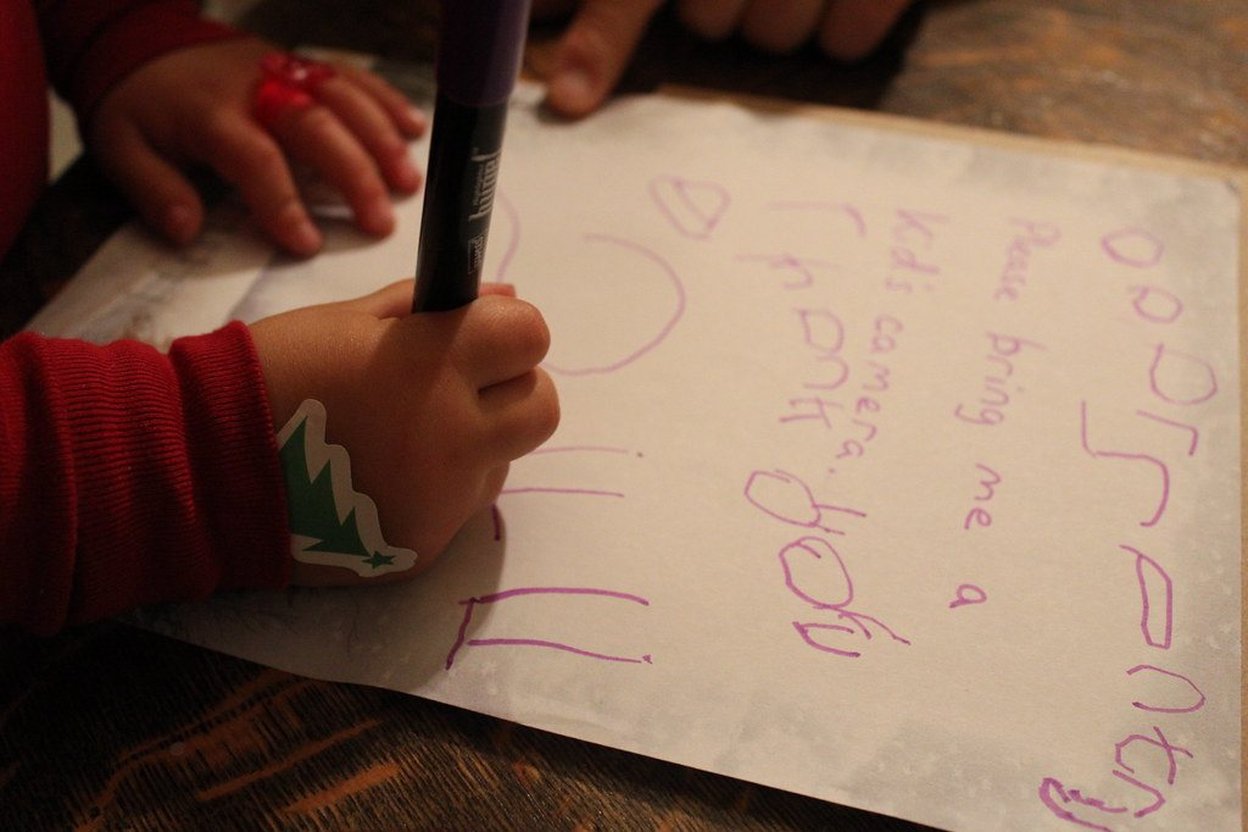
Plan wish lists, budgets, and Santa with your co-parent so your child gets gifts from two homes without competition or duplicate fights.
Best for the Children Editorial·8 min read·October 29, 2026
Your child hands you a wish list in October, written in marker, and you wonder whether the other house has the same list. You wonder whether you'll both buy the same game, and whether Santa will show up looking different at each door. The answer is one plan made by the adults ahead of time. Agree on who buys what and a rough budget, and agree on how Santa works. Then the holiday stays about your child, not about the two of you.
Before Thanksgiving gets busy, settle three things with your co-parent:
Everything else depends on one idea. The goal is for your child to feel loved, not for either parent to feel proven right or more generous. Christmas is not a scoreboard. In twenty-five years in and out of family court, we've learned that children see more than adults think. They notice who gave the bigger box, and they notice when a gift turns into an argument.
One more thing worth agreeing on: once a gift is given, treat it as your child's. The new tablet or favorite stuffed animal can go back and forth between homes. This isn't a legal rule anywhere. It's a choice parents make, and it tells your child that their things belong to them and not to a house.
The simplest step is to share the wish list with your co-parent and talk about what each of you plans to buy. There are two common ways to set it up.
One shared list. Both parents use a list they can each update, like a Google Sheet or a gift-registry app such as Giftster. Some families sort items into needs, wants, and experiences, then mark each one with a home. When something gets bought, it gets checked off.
A separate list for each home. Your child makes one list for each house. Neither parent feels the other saw it first, and there's less to coordinate. This can work better when talking is hard.
Neither way is always better. Pick the one you'll actually keep up with.
Doubles still happen. Give your child a quick, calm heads-up ahead of time: "Sometimes you might get the same thing at both houses, and that's okay." Kids can live with two copies of a game. What bothers them is seeing adults upset about it.
Keep all gift planning between the parents. Don't ask your child to find out what the other house is buying, and don't send messages through them. A child asked to report on the other home is being put in the middle, even over something as small as a toy.
Don't hold back a gift the other parent might give first, either. If the timing works out so the other house opens the big item on the 24th, let it go.
Agree on a fair range for spending, and allow for differences in income. Separation often leaves one household with less money. A shared range keeps one home from looking like the "fun" house just because it has more cash in December.
Big gifts are easier when you split them. You can split the cost, or split the gift itself: one parent buys the bike and the other buys the helmet and lights. If you can give it together, even briefly, do.
Think about where the gift will live. A bike or a pet that stays at one house can leave your child wishing they were there instead, and it can leave the other parent feeling they paid for something they never see. Books, dolls, and many electronic toys can go with your child. If you're sharing a cost, choose something that can move.
A few rules keep things fair:
If your child believes in Santa, Santa needs to act the same at both homes. Kids compare notes. Agree on:
Santa is also flexible. He can come on more than one night and visit more than one house. Plenty of children are happy to hear that Santa knows they have two homes.
If neither of you does Santa, skip this section and use the same idea for whatever traditions your family keeps.
Your custody order or parenting plan decides who has your child when, and that includes Christmas. Read the holiday section now, before Halloween, while there's still time. Holiday schedules vary by state and even by county. Some orders switch Christmas Eve and Christmas Day between parents in odd and even years. Others divide the day or the break differently. Check your own order rather than relying on what a friend's says.
Christmas doesn't have to happen on December 25. Celebrating on the 26th or 27th is fine if that's when your time falls. If you and your co-parent agree to change the plan, put it in writing, such as a text, email, or message in a co-parenting app, so nobody remembers it differently later. If you expect a real dispute, don't wait until December. Talk to a lawyer early, because a court may need time to hear it before the holiday.
When you can't be together, you can still include each other:
If every conversation with your co-parent turns into a fight, keep gift planning in writing. Use a neutral app like OurFamilyWizard, or a shared Google or Cozi calendar. Keep messages short and about your child: "She asked for art supplies and a scooter. I'll get the scooter. Can you do the art supplies?"
If there's real hostility, celebrate separately. A joint gift-opening only helps when the parents can be calm in the same room. If your child is under about 12, the parents should make the decisions. Teenagers can be asked what they'd like.
If your plan doesn't cover holidays, or covers them so vaguely that every December turns into an argument, now is a good time to fix it. A mediator or family lawyer can help you add clear holiday terms, so next year starts with a plan already in place.
Photo: Letter to Santa by Vancour, BY 2.0.
How to set up a holiday call with your child's other parent, step back during it, and avoid turning it into a debrief afterward.
Why kids often prefer one parent after a divorce, when it signals something more serious, and how to keep your child out of the middle.
Learn how to give your child a calm landing after a hard handoff, when a day or two of settling is normal, and when to seek professional help.