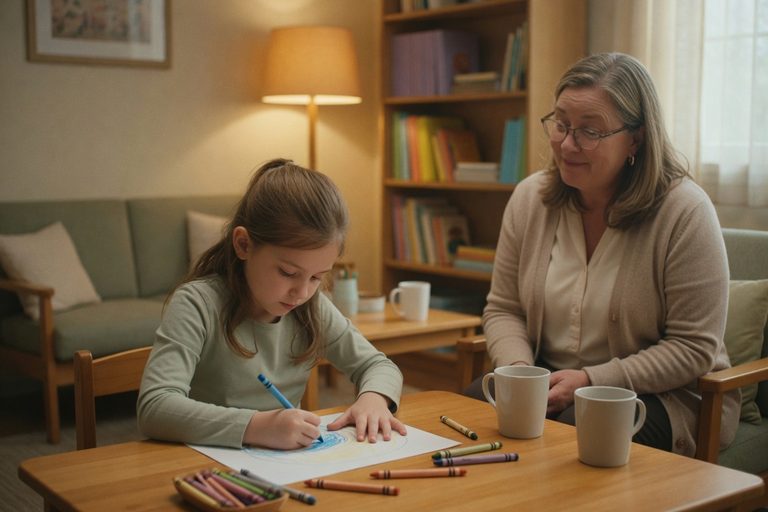
When your child comes home angry, snappy, withdrawn, or simply “off,” the change can make you wonder what happened at the other home. A difficult first day or two can be a common response to switching homes, and by itself it does not show that something is wrong there.
Give your child a calm landing, keep adult conflict away from the handoff, and pay attention to whether the distress eases or continues. If you see signs of danger or the behavior persists, ask for professional help.
The short answer
A child’s anger after an exchange often reflects the strain of moving between homes and routines; it does not, by itself, prove that something is wrong at the other home. You can take the feeling seriously without treating it as evidence about what happened.
Some children hold their emotions together through the transition and let them out once they reach a familiar parent. A child may need quiet, food, rest, or time before they can talk. A day or two of settling is a common family experience, though no fixed timeline applies to every child.
Stay curious and steady. You might say, “You seem upset. I’m here if you want to talk.” Let your child decide when to share, and listen without leading them toward a particular explanation. If they tell you something concerning, respond calmly and write down their words as accurately as you can.
The Arizona court’s parenting-time guidelines describe transition reactions as something parents may see around exchanges and encourage a calm, supportive response. The guidance is a resource for parents, not a rule that determines what your child’s behavior means.
Why the switch is hard on kids
Moving between homes asks your child to adjust to different routines, surroundings, and expectations in a short span of time. That effort can show up as irritability or withdrawal when your child arrives.
The exchange itself can bring tension. Your child may feel caught between parents, miss the parent they just left, or need time to shift from one household’s rhythm to the other. Changes in sleep, meals, belongings, or plans can add to the strain.
Age and temperament shape how a child expresses stress. One child may complain or snap; another may go quiet or cling close. Your child’s behavior gives you a reason to offer support and stay observant, but it cannot tell you on its own what happened in the other household.
The American Academy of Pediatrics offers guidance on adjusting to divorce and ways to support children after separation. The practical message is to keep your child out of adult disputes, provide reassurance, and make space for feelings without asking them to choose sides.
The first 48 hours: what helps
A soft landing gives your child room to settle before you ask for explanations or expect a quick return to routine. Keep the first stretch home predictable, low-pressure, and focused on basic care.
Try this plan:
- Make the arrival calm. Greet your child warmly, help with belongings, and keep questions about the visit simple. “I’m glad you’re home” gives connection without demanding a report.
- Cover the basics. Offer food, water, a chance to unpack, and time to rest. Keep plans light if your child seems tired or overwhelmed.
- Let your child choose how to reconnect. They may want company, quiet, or an ordinary activity together. Stay available without pressing them to talk.
- Keep routines familiar. A steady bedtime and predictable evening can help your child move back into your household’s rhythm. The AAP’s sleep guidance after separation or divorce addresses sleep changes and the value of a consistent bedtime routine.
- Listen without investigating. If your child shares something, give them time to speak in their own words. Use open prompts such as “What would you like me to know?” Avoid questions that suggest an answer or criticize the other parent.
- Notice patterns. Keep brief notes about what you observe, including when the distress starts, what helps, and whether it eases. Record your child’s exact words when a statement raises concern.
If your child remains unsettled, stay supportive and seek advice from the pediatrician or a child counselor. You do not need to wait for a particular number of days when you are concerned about safety or your child’s well-being.
Working on it with the other parent
Keep adult coordination between adults, and give your child a consistent message that both homes are safe places to love. A calm, practical exchange can reduce the pressure your child feels during transitions.
Contact the other parent privately when you need to discuss a pattern. Describe what you observed without accusing: “They seemed upset after the last two exchanges and needed quiet before bed.” Ask whether the other parent has noticed anything similar, and agree on useful details to share, such as schedule changes or items your child needs.
Keep handoffs brief and civil. Avoid using your child to deliver messages, collect information, or carry disagreements. Do not ask them to report on the other household or reassure you about what happens there. The AAP’s advice on supporting children after separation emphasizes protecting children from conflict and helping them maintain relationships with both parents when it is safe to do so.
If direct communication becomes heated, use a neutral written channel or a professional who can help with co-parent communication. If you have a specific safety concern, focus on your child’s immediate needs and seek appropriate professional guidance instead of trying to resolve the concern through a tense handoff.
When it's more than a transition
Take persistent distress, a sharp change in behavior, or any disclosure of harm seriously and seek help. A reaction after an exchange cannot establish its cause, so look at the full pattern and your child’s safety.
Pay attention when your child’s distress continues or worsens, disrupts sleep or daily life, or appears alongside a marked change in mood or behavior. Take direct statements about being hurt, threatened, or unsafe seriously. Listen calmly, avoid pressing for details, and write down what your child says in their own words.
Contact your child’s pediatrician or a licensed child counselor for guidance. Ask about counseling for your child or family, and share the specific changes you have observed. If you believe your child faces immediate danger, contact emergency services. For suspected child abuse or neglect, contact your state’s child protection agency; the federal Child Welfare Information Gateway FAQ explains how to find the appropriate reporting contact.
Your response can remain calm while you act promptly. Avoid promising secrecy, and do not confront someone in a way that could increase risk to your child.
Look after yourself too
Getting support for yourself can help you respond to your child with steadiness. Separation stress can make each difficult exchange feel heavier, especially when you are also managing your own emotions.
Talk with a counselor, join a support group, or lean on a trusted friend who can listen without pulling your child into adult conflict. If you are concerned about your child’s adjustment, ask the pediatrician whether counseling for your child or family would help. Bring your observations and any notes about changes in behavior or sleep to that conversation.
Sources (5)
Photo by StockSnap on Pixabay.