High-Conflict Co-Parenting
Posting About Your Kids and Your Custody Case on Social Media
What you post today can be read by the other parent, their lawyer, and your child. A plain guide to keeping a custody case off your feed.
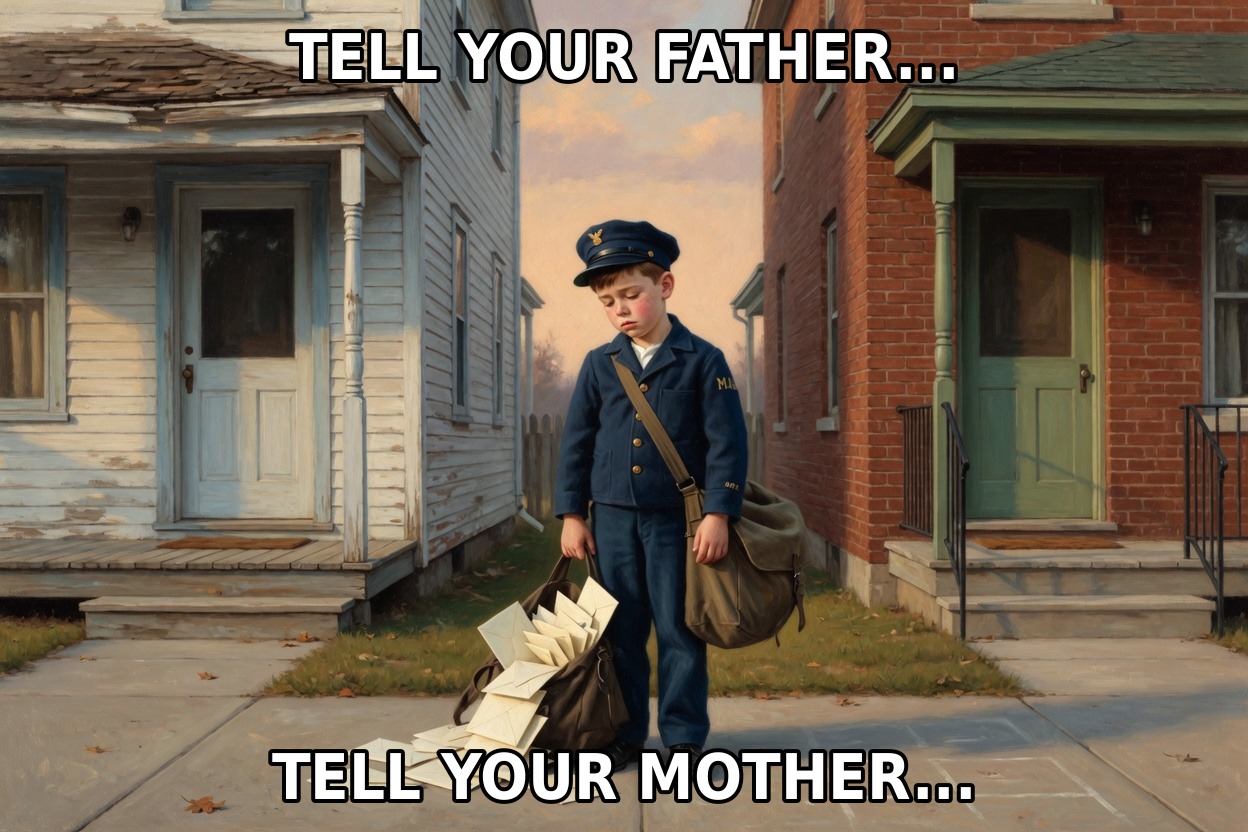
Notes in the backpack and ‘tell your dad’ are adult work. How to move logistics off the child without starting another fight.
Best for the Children Editorial·5 min read·September 9, 2026
A child should not be the phone. “Tell your mom I’m running late.” “Ask your dad if you can stay.” “Give this envelope to her and don’t read it.” It feels efficient. It puts the kid in the middle of adult business they cannot fix, and it teaches them that love means carrying other people’s anger.
Adults stop talking. Texts turn into exhibits. Someone blocks someone. The backpack is still moving between houses, so it becomes the mail. Sometimes it is laziness. Sometimes it is control: the parent who “just asks the child” gets information without having to deal with the other adult. Either way, the child pays.
Kids in that role start editing. They soften news. They pick a side so the night is quieter. They forget on purpose. That is not deceit. That is a child managing two temperatures. Helping kids think for themselves between two homes is the opposite of making them the switchboard.
Asking “Did you have a good time?” is ordinary. Asking them to report on the other parent’s kitchen, dating life, or mood is surveillance. If they volunteer something hard, listen — then take it off their plate. When your child tells you things about the other parent is that fork. Do not send them back with a rebuttal.
Adults need one channel that is not a child:
If every text becomes a fight, stop pretending you are co-parenting by group chat. Parallel parenting is the design for that: written schedule, one channel, almost no extra conversation. The child still moves. The adults stop using them as the wire.
Put the rule in the parenting plan if you are still in mediation: neither parent will send messages, money, or documents through the child. Then follow it even when the other parent does not. Someone has to stop first.
Keep it short and boring. Boring is a gift.
Do not recruit them as your ally (“We don’t play that game in this house, unlike some people”). That is another message, just aimed at their loyalty. How to talk with kids about two homes is the tone: facts, warmth, no campaign.
You cannot control their mouth. You can refuse the role:
Violation of a parenting plan is an adult problem. When a parenting plan is violated is the enforcement side. Do not send the child to announce that you are “calling your lawyer.”
A phone in a child’s pocket is a pocket messenger if you use it that way. Do not text the other parent through the child’s device. Do not ask them to screenshot the other house. If they need a phone for safety or two-home logistics, set that up as their line to both parents, not as your hotline. Phones in two homes is the longer version.
Kids should be able to call the other parent from your house without reporting the conversation. Privacy inside a child’s relationship with each parent is not a plot. It is how they stay a child.
Before you ask them to pass something along, ask: would I be comfortable saying this in front of a teacher? If not, it is adult business. Email it. If you cannot email it without a fight, that is a co-parenting problem, not a job for an eight-year-old.
This is educational, not legal advice. Some orders already ban using the child as a messenger. If yours does, follow it. If it does not, you can still stop. The child does not need a court caption to get that much peace.
This site is not a law firm. If messages through the child are part of harassment or a safety issue, talk to a licensed attorney where you live, and use the adult channels the court already gave you.
What you post today can be read by the other parent, their lawyer, and your child. A plain guide to keeping a custody case off your feed.
Twenty minutes late, then forty. How to handle a chronically late co-parent without turning your child into the waiting room, and when lateness becomes something to document.
When a co-parent quizzes your child after every visit: the difference between care and building a case, what to do instead, and moving adult questions to an adult channel.