
Putting Children First
When Your Child Comes Home Angry and Needs a Couple of Days to Settle
Learn how to give your child a calm landing after a hard handoff, when a day or two of settling is normal, and when to seek professional help.
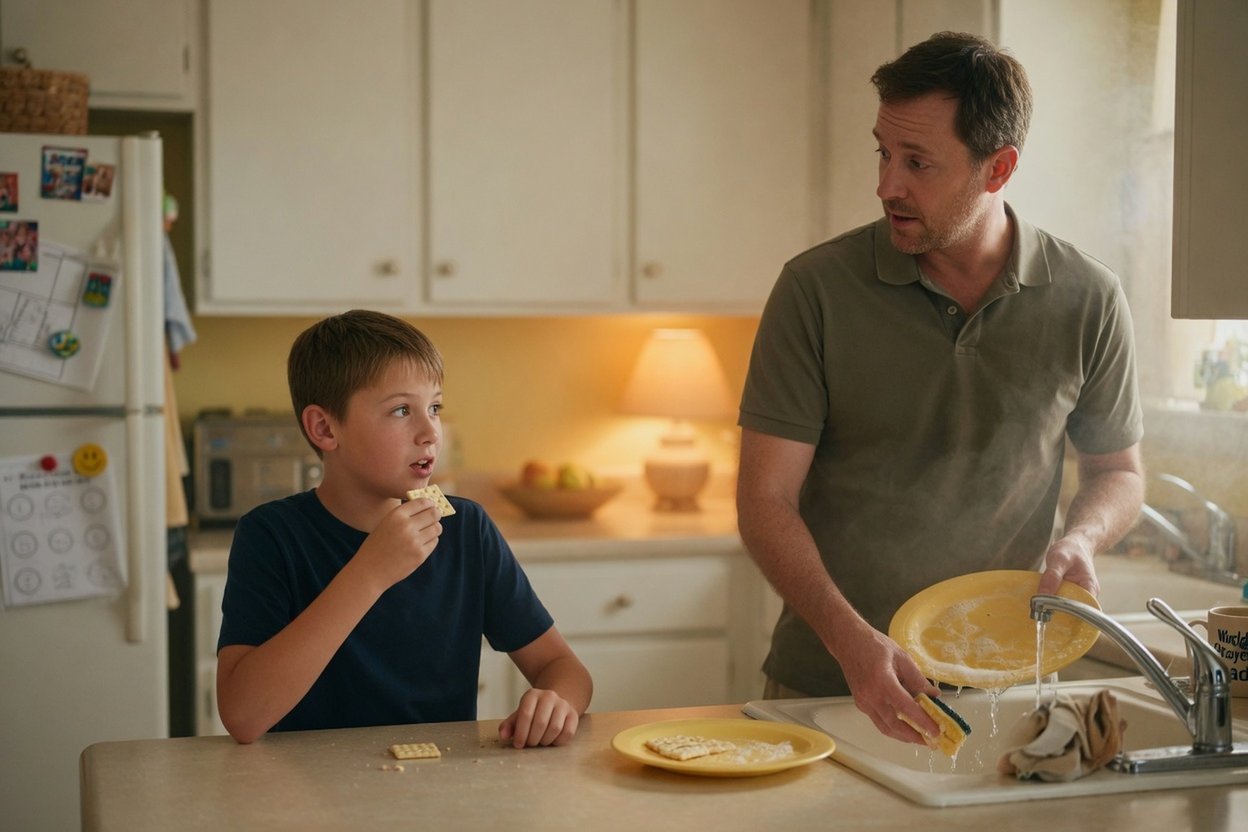
When children live in two homes, they often share information about what happens in the other household. Sometimes they are simply talking about their day.
Best for the Children Editorial·4 min read·August 20, 2026·Updated August 24, 2026
When children live in two homes, they often share information about what happens in the other household. Sometimes they are simply talking about their day. Sometimes they are seeking reassurance. And sometimes they have been pulled—intentionally or unintentionally—into adult conflict.
How you respond in these moments matters. Your reaction can either protect your child from the middle of the conflict or accidentally place them more deeply into it.
Children may tell you things about the other parent because:
Your job is not to gather evidence. Your job is to protect your child’s emotional position.
The most important goal is to avoid turning your child into a messenger, spy, or ally against the other parent. Even when the information is frustrating or concerning, the child should not feel responsible for managing the adult relationship.
1. Stay calm.
Your emotional reaction teaches the child whether it is safe to talk—and whether talking leads to more conflict.
2. Thank them for sharing without digging for more.
A simple “Thank you for telling me” or “I’m glad you felt you could say that” keeps the door open without turning the conversation into an interrogation.
3. Separate ordinary sharing from important concerns.
There is a difference between “Dad lets us stay up late” and “I don’t feel safe” or “Someone is being hurt.” Treat them differently.
4. Avoid badmouthing the other parent.
Even if you disagree strongly with what you’ve heard, criticizing the other parent in front of the child increases loyalty conflict and anxiety.
If the information seems important—especially if it involves safety, repeated distress, or significant concerns—write it down as soon as possible while it is still fresh.
When documenting:
Good documentation can be helpful later if patterns emerge or if professional guidance becomes necessary. However, documentation should never turn into questioning your child like a witness. Let them share what they choose to share. Do not push for details they are not ready to give.
You can gently teach children the difference between normal sharing and harmful patterns:
You can say things like:
If what your child shares suggests possible safety issues, neglect, or significant emotional harm, take it seriously. In those cases:
The child should never feel they are responsible for “making the case.”
Children do best when both homes feel emotionally safe enough to talk without fear of starting a fight. You cannot fully control the other household, but you can make your own home a place where your child does not have to choose sides or carry adult burdens.
When your child tells you things about the other parent, it is rarely just about the information itself. It is about whether they feel safe, protected, and free from the responsibility of managing the adults in their life.
Responding with calm, restraint, clear boundaries, and careful documentation when needed is one of the most practical ways to put them first.
Educational only — not legal or clinical advice.
Related reading: How to Talk With Kids About Separation, Two Homes, and Other Hard Topics · When You and Your Co-Parent Have Different Discipline Styles · Stop Using Your Child as a Messenger Between Homes
Learn how to give your child a calm landing after a hard handoff, when a day or two of settling is normal, and when to seek professional help.
The first report card of the year can start a blame game between homes. How to share school information, set up homework in two houses, and keep grades from becoming evidence.
Learn what to tell your child when each home has different candy rules, plus shared safety steps and a plan to agree on with your co-parent.