
High-Conflict Co-Parenting
Posting About Your Kids and Your Custody Case on Social Media
What you post today can be read by the other parent, their lawyer, and your child. A plain guide to keeping a custody case off your feed.
Twenty minutes late, then forty. How to handle a chronically late co-parent without turning your child into the waiting room, and when lateness becomes something to document.
Best for the Children Editorial·4 min read·October 5, 2026
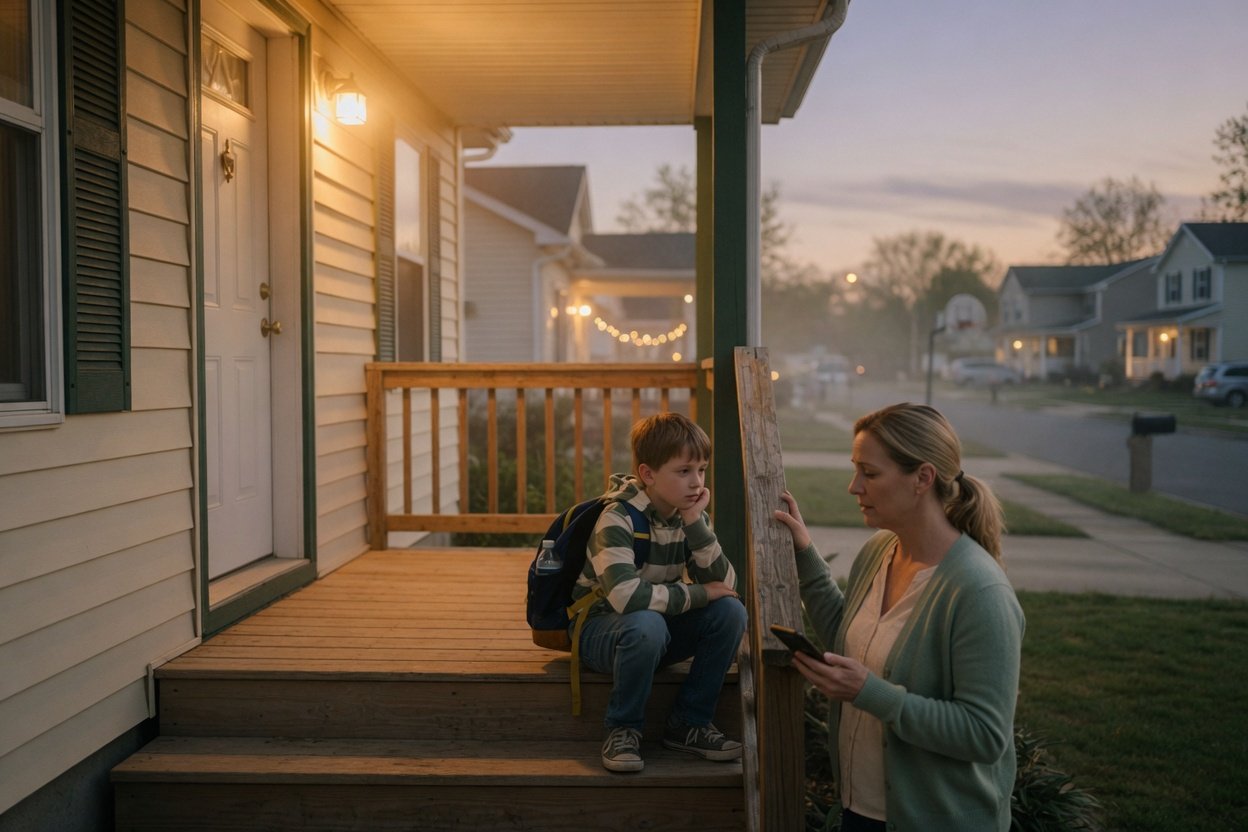
The exchange was at five. It is now 5:40. Your child has been sitting by the door with a bag, asking the question you cannot answer: is Dad coming? You are already writing the message in your head. Before you send it, think about the person who is actually waiting.
For an adult, a late pickup is an annoyance and an insult. For a child, it is a small mystery with a bad answer. Did they forget me? Did I do something? A child who is repeatedly kept waiting can learn to stop hoping, which is a sad thing to teach.
Keep your face and voice steady. Give a plain, true answer: “We do not know yet. Let’s find something to do while we wait.” Do not say “your father is always like this.” Even when it is true, it hands the child a verdict about a parent she loves.
Decide ahead of time how long you will wait before you do something else. Many parents pick fifteen or thirty minutes. Tell the other parent in a calm message: “If you are more than twenty minutes late, I will plan to keep her tonight and we can reschedule.” Then follow through. A plan takes the anger out of the moment.
Put the plan in writing and send it once, not every week. Some orders spell out a grace period and what happens after it. If yours does, use that.
The message you send while angry is the one you will regret when it is read back. Try: “We are at the house. What time will you be here?” If there is no answer in a few minutes, a second line: “I will give it until 5:30.” Save both. Do not add commentary.
If you want a starting point for tone, ready-to-use co-parenting text and email scripts has short examples that stay factual.
If lateness is regular, a simple log helps: date, scheduled time, actual time, what you were told. Write it down in the evening, once the child is asleep. That is the kind of record described in how to keep a custody journal. A log is a memory aid, not a weapon. Do not quiz the child, do not screenshot her face on the steps, and do not narrate the drama.
If your order sets specific times and one parent keeps missing them, that may matter to a judge. What weight it gets depends on your state and your judge. That is a question for an attorney, not for a group chat.
Do not refuse the handoff as punishment when the other parent finally arrives, unless your order or safety truly demands it. Do not send the child out alone into a dark or unsafe place. Do not punish the child with a cold shoulder for the other parent’s delay. Do not talk to the other parent through the child: stop using your child as a messenger.
If the lateness has turned into no-shows, or the child is starting to dread exchanges, look at how it feels for her. When your child refuses to go to the other parent’s home is about that fear.
Sometimes a parent is late because the schedule does not fit their work. A shift that ends at five cannot deliver a child at five across town. If that is the reason, a small change might help more than any message: a later time, a closer meeting place, or a third-party handoff. See when you can change the terms of a parenting plan. Changes that are agreed to in writing are better than a standing argument.
Keep a small kit by the door: a book, a snack, a card game. Waiting can be a little bit okay if a parent is right there and the child is not the one in charge of the mood. If she is upset, name it: “You wanted to see him. That makes sense.” Then let her feel it. She does not need you to fix the other parent.
This is educational information, not legal advice. What counts as “late,” and what you can do about it, depends on your order and your state. If lateness is a pattern and you are considering going back to court, talk to a licensed attorney where you live.
This site is not a law firm and this is not legal advice. The car pulls up eventually. What she remembers most is who was calm while she waited.
What you post today can be read by the other parent, their lawyer, and your child. A plain guide to keeping a custody case off your feed.
When a co-parent quizzes your child after every visit: the difference between care and building a case, what to do instead, and moving adult questions to an adult channel.
Notes in the backpack and ‘tell your dad’ are adult work. How to move logistics off the child without starting another fight.