
Living with the Order
When One Home Allows Social Media and the Other Doesn't
Learn who decides on social media when co-parents disagree, what your custody order and state law may say, and how to set one plan for both homes.
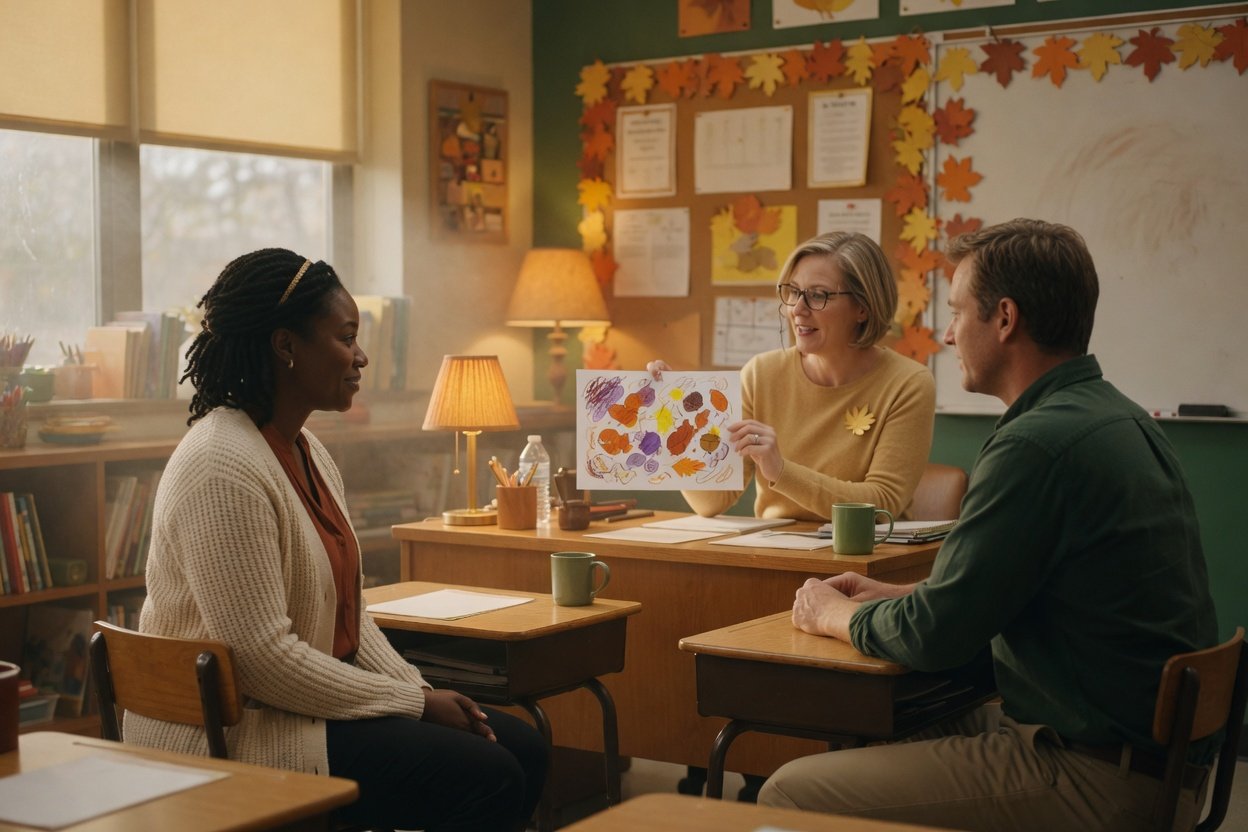
Fall conference season is here. How to show up for your child's teacher when you and the other parent are not on the same page, and what to do about the report afterward.
Best for the Children Editorial·5 min read·October 4, 2026
The email arrives in the first weeks of the school year: sign up for a conference slot. Two parents, one child, two homes, and a fifteen-minute window. It can be a small victory or a very awkward quarter hour. The teacher is not judging your family. The teacher wants to help your child, and the best thing you can do is show up ready to let them.
Unless an order says otherwise, both legal parents can usually get report cards, attend conferences, and be listed as contacts. Schools are not there to referee, and many will schedule you together or back to back. Ask the office how they handle two households. Many will happily send everything to both addresses if you give them the current order.
If you cannot be in the same room without a fight, ask for separate slots or a video call. Teachers have done this many times. It is not a failure. It is the child getting two adults who each hear the same things from the same person. See parallel parenting for ways to keep contact low when it is needed.
If the school has not seen the current paperwork, when the school asks for the custody order covers what to hand over and what to keep to yourself.
Bring a short list. Does she seem happy? Who does she sit with? Is she keeping up? Does she tell you when something is hard? Ask what helps at school that could help at home. Ask if the teacher has noticed anything on Mondays or Fridays, the days when a child moves between houses.
Do not bring the case. The teacher does not need the hearing recap, and a long story about the other parent makes the school less likely to see you as a partner. If the child’s schedule is affecting sleep or homework, say so plainly: “She is at two homes and Sundays are hard.” That gives the teacher something useful, and building security and routines when your child splits time can help at home.
If you do attend together, treat it like a small job. Arrive on time. Sit where you can both see the teacher. Take your own notes, and do not correct each other. When the teacher says something that lands hard, pause before you react. The teacher will remember which parent stayed calm.
You can disagree later, privately, on the adult channel. In front of the teacher, keep it about the child. If one parent talks over the other, the teacher notices, and so does the child once she hears about it.
Send the other parent a two-line summary the same evening, even if you attended together. Short scripts can keep it factual. “Teacher says reading is strong, math needs practice, wants us to check the folder on Tuesdays.” It closes the loop and removes the temptation to pass a version through your child. If you use a shared calendar or app, put the follow-ups there. See the best co-parenting apps and shared calendars for ways to keep it simple.
Do not interrogate the child about what the teacher said. She will feel like she is being called into a meeting she did not schedule. A better line is: “I met your teacher. She says you like art.” Then let her tell you the rest.
Work schedules, distance, and tension all get in the way. If you cannot attend, ask for a phone or video slot, or an email summary. Do not assume no one will fill you in. If the other parent goes alone, read what they send with an open mind. If they do not share anything, ask the teacher directly.
If the school is refusing to give you information you believe you are entitled to, that is a paperwork question, not a fight with the front desk. Bring your order and ask who can help. If it does not resolve, talk to an attorney.
Kids know when both parents show up. They also know when one does not, and when the parents sit in different corners. Children do not need perfect harmony. They need to see that the people who love them are both interested in how school is going. A calm fifteen minutes at a small desk counts more than it seems.
This is educational information, not legal advice. Who has the right to attend, receive records, and make school decisions depends on your order and your state. If you have questions about your specific rights, ask a licensed attorney where you live.
This site is not a law firm and this is not legal advice. A teacher, two adults, and a child’s drawing on the wall. Keep the meeting about that.
Learn who decides on social media when co-parents disagree, what your custody order and state law may say, and how to set one plan for both homes.
A new partner has no automatic say over your court-ordered schedule. Learn who is responsible and how to keep a record that protects your child.
Learn whether your custody order allows an out-of-state Thanksgiving trip, which automatic orders might restrict travel, and how to plan it safely.