
Parenting Time & Schedules
When Your Child Has a Fever on the Day of a Holiday Exchange
Child has a fever on handoff day? Learn what to document, how to tell the other parent, and when a sick-day pause is justified under your order.

Want to stop splitting Christmas Day after a baby? See how to ask, three alternative schedules, and what to do if the answer is no.
Best for the Children Editorial·6 min read·November 28, 2026
It's late November, Christmas is about four weeks out, and you're picturing December 25 with a newborn: the packed diaper bag, the clock, the mid-day handoff. Yes, you can ask your co-parent to stop splitting Christmas Day. Asking is the right first move, and most parents settle holiday schedules without a judge. Here is how to ask, what to offer instead, and what to do if the answer is no.
Nearly 13 million parents across the country are currently figuring out how to share holiday time with their kids. Asking to change a holiday schedule is ordinary, not a sign that something has gone wrong.
Research also shows that 9 out of 10 custody arrangements are worked out between parents without needing a judge. A calm conversation is usually the whole process. Starting now, rather than on December 23, gives both of you room to say yes.
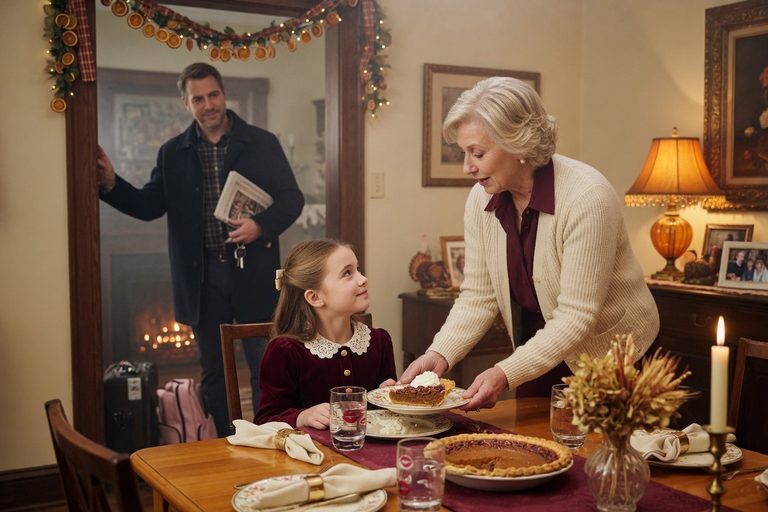
Standard shared holiday arrangements typically give one parent mornings and the other afternoons. On paper that looks fair. In practice, Christmas Day becomes a clock: gifts opened on a deadline, a meal cut short, a handoff in the middle of the day.
A new baby is a reason to look at that clock again. That's our view, not a rule. A mid-day exchange now means getting an infant ready, getting out the door, and doing it all while the older child is still wound up from the morning. Your older child feels it too. Kids notice when the day is built around a handoff, and a rushed Christmas is still a rushed Christmas, even when the adults are being polite.
When you ask, keep it about the day, not about your co-parent. "I'd like to find a way where Christmas isn't cut in half" lands better than "this isn't working for me." Say what you're offering in return, because a request with nothing on the table sounds like a demand.
If you want to stop splitting Christmas Day itself, bring a specific alternative. These are the options that come up in family law guidance:
Here are three schedule structures you can put in front of your co-parent:
A year-to-year swap can help with fairness. If you hold Christmas Eve and Christmas Day this year, your co-parent holds them next year. The schedules above don't spell that out, so if you want it, say so in the proposal.
If you're the parent being asked, remember that the request is about the day, not about you. A good answer is a counteroffer, not a flat no. A parent who keeps part of the holiday every year, with a real stretch of time, often ends up with a better one.
Whatever you agree on, put it in writing. That's our advice, not a legal rule, but it's hard to argue with a clear message when December gets busy.
First, check whether you have a court order. If your holiday schedule is written into an order, the order stays in force until you both agree to change it or a court changes it. Don't simply skip a handoff. A deal you worked out informally and never wrote down can fall apart exactly when you need it. Our calendar builder lays the order's parenting time over the school year, so holidays and breaks are easy to check.
If you can't agree, here is the path described by one UK family law firm:
Before going to court in that system, you have to take these steps:
Those are UK procedures, and they won't apply to you if you live in the US. Court processes, forms, and holiday rules differ from state to state, so check the rules where your case is filed, and see how your local court handles requests to change a schedule.
The other side of the problem is a parent who is denied visitation altogether. Parents in that position can work with a family law attorney to file an enforcement order. That is a different situation from a request to change the schedule, but it matters here: a holiday is when a refused handoff hurts most.
Whatever you decide, your children are watching how the adults handle it. They know there are two homes and they notice when the adults are tense. A new baby adds a lot to their world already, and the holiday is the one day they want to feel steady.
So make the ask early and put something real on the table. Keep it simple enough to put in a text, and give your co-parent time to think. Christmas is about four weeks away, and that's enough time to settle it.
Child has a fever on handoff day? Learn what to document, how to tell the other parent, and when a sick-day pause is justified under your order.
Learn what to tell your child, how to check your order, and how to document a last-minute holiday cancellation and handle make-up time.
See how custody orders split New Year's Eve and New Year's Day, what to check in your order, and how to keep the night calm for your child.