Putting Children First
How Do You Help a Child Who Misses the Other Parent at Christmas?
Helps parents comfort a child who misses the other parent at Christmas, with words to use, a plan for calls, and ways to enjoy both homes.
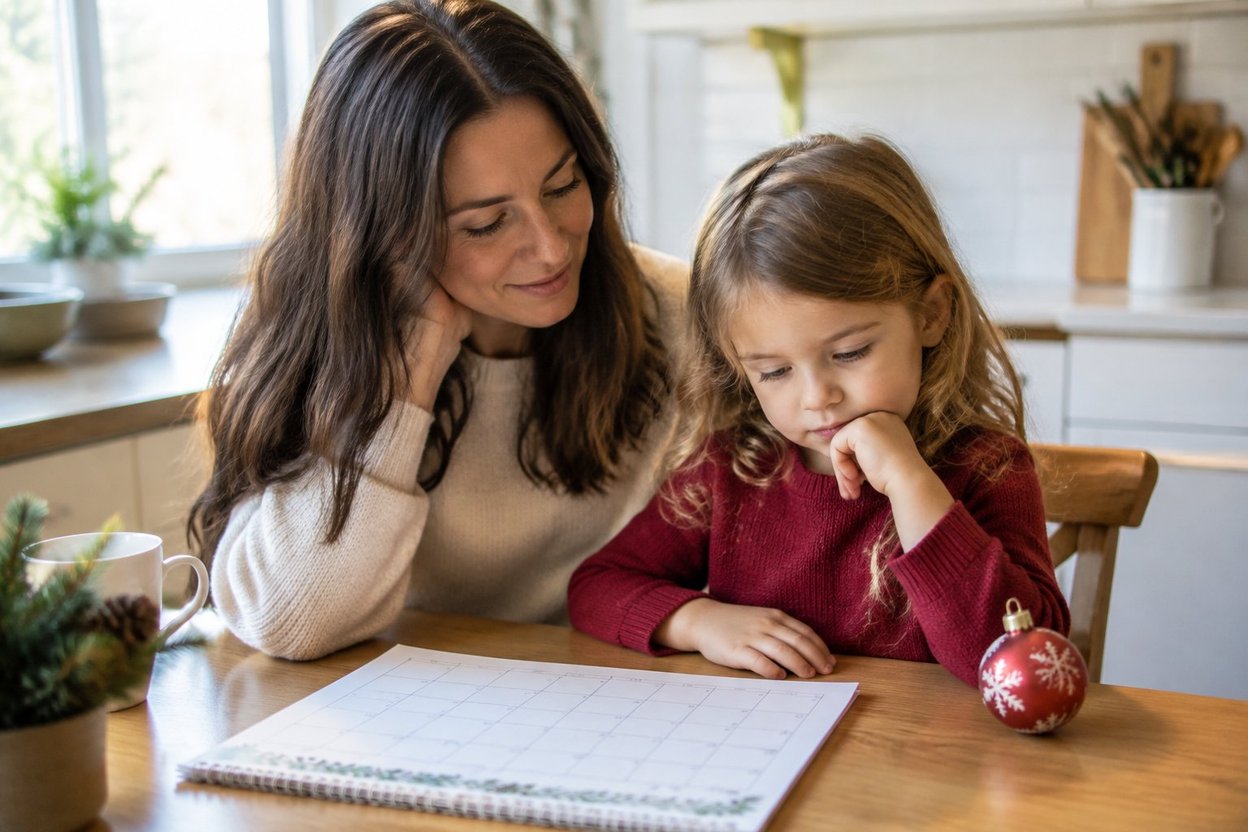
Your child worries about leaving you alone at Christmas? Learn how to reassure them, make your own plan, and let them enjoy the other home.
Best for the Children Editorial·7 min read·November 26, 2026
Maybe it came up while you were sorting Halloween costumes or looking at the calendar: "If I go to Dad's for Christmas, who will you have?" or "I don't want Mom to be by herself." Your child wants to protect you. Listen to the worry and take it seriously. Then tell them clearly that looking after you is not their job. You'll help them most by making a real plan for your own day, so they can go and enjoy Christmas without carrying you along in their head.
Start by listening. Let your child say the whole worry before you answer. Then thank them for caring, and hand the job back to the adults. You might say something like:
"Thank you for caring about me. I'll miss you, and I can take care of myself. You can enjoy Christmas with your other parent."
Don't promise you'll never feel sad. Your child won't believe it, and it teaches them that sad feelings have to be hidden. It's fine to say "I'll miss you." What matters is that missing them is something you'll handle, not something they have to fix.
Honest reassurance is different from asking a child to comfort you. "I'll be fine, I've got plans" is reassurance. "I don't know what I'll do without you" asks the child to carry your feelings. The Child Mind Institute notes that children may hide their own feelings to protect a parent who seems upset. The American Academy of Child and Adolescent Psychiatry warns that leaning on a child for emotional support adds pressure while they are still adjusting themselves. The American Academy of Pediatrics says children should be able to spend time with the other parent without feeling guilty or responsible for an adult's emotional needs.
Before you solve anything, ask an open question: "What are you imagining might happen while you're away?"
The answer is often more specific than you'd expect. It usually falls into one of these:
Each one needs a different answer, so listen first. Pediatric guidance says acknowledging a child's feelings gives them room to explain without being pushed to cheer up right away (AAP).
Don't read too much into it either. A child who hesitates about leaving you isn't telling you something is wrong at the other home. Worry about split loyalty is a common reaction to separation, and pressure to pick a side makes it worse (AACAP). Your child can love you both. They don't have to choose.
Reassurance works better when it's true. Experts suggest that parents who are struggling turn to other adults or a counselor, so they can stay steady for their children (AAP, Child Mind Institute). Planning the day and asking friends or family for support is also recommended (Action for Children). Now, before Thanksgiving on November 26 fills up the calendar, is a good time to set it up.
Here are some examples of what a plan could look like:
Tell your child a simple version that's true: "I'm having lunch with Aunt Sue and watching a movie." Leave out the rest.
If you've already said something that put weight on them, fix it. Here is some suggested wording: "I was upset when I said that. Looking after my feelings is my responsibility." Children notice far more than adults think, and they notice when a parent takes something back, too.
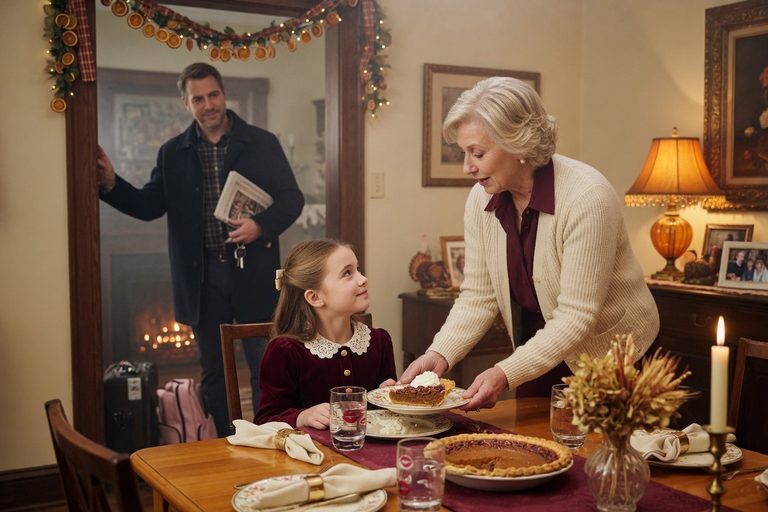
A lot of worry is really uncertainty, and a calendar helps with that. Sit down with your child and look at the holiday schedule together. Show them which days they're with whom, how the handoff will work, and the exact day you'll see each other again. Predictable routines and clear information about where a child will be help reduce uncertainty (Child Mind Institute, AAP). If the holiday schedule comes from a parenting plan or court order, go by what it actually says. Holiday terms differ from family to family, and the rules around them vary by state, so check your own order and your state's rules if anything is unclear. Our calendar builder lays the order's parenting time over the school year, so holidays and breaks are easy to check.
If a call during the visit makes sense, work it out with the other parent ahead of time. Keep it to something that fits their day. Nobody has a perfect length or number of calls. The point is what the call means: it's a way to stay connected, like "Tell me about your presents!" It shouldn't be a check-in to make sure you're coping. If your child hangs up worried about you, the call has turned into a chore for them.
You can also move the holiday instead of losing it. An early or late celebration is a real option when you can't be together on the day (Action for Children). "Our Christmas is the 28th" gives your child something to look forward to on both ends.
How you say goodbye shapes the whole visit. Keep it warm and short: "I hope you have a lovely time. I can't wait to hear about it." Don't say things that invite guilt, like "It'll be so quiet here," or "I guess I'll just sit here." Don't compare the homes either: who has the bigger tree, who's spending more, whose family does it right.
Keep adult disagreements about the schedule away from your child completely. If there's a dispute over pickup times or who got which holiday, handle it between the adults. Keeping children out of adult conflict supports their adjustment after separation (AAP, AACAP).
Supporting your child's time with the other parent doesn't mean you all have to spend Christmas together. A joint celebration can work for parents who are comfortable around each other. A tense gathering can put children right in the middle of conflict (Child Mind Institute). Being glad your child has a good day somewhere else is support enough.
One limit applies to all of this: encouraging contact assumes both homes are safe and both caregivers are capable (AAP). If that isn't true, safety comes first.
A teary goodbye is normal, and so is a quiet first evening back. What's worth watching is worry that keeps going or starts getting in the way of everyday life. According to the National Institute of Mental Health and the AAP, signs worth asking about include:
None of these is a diagnosis, and you don't need to make one. They're reasons to ask for advice. Your child's pediatrician is a good place to start: they can assess what's going on and arrange more support if it's needed. Teachers can also tell you what they're seeing at school (NIMH).
If your child behaves in unsafe ways or talks about wanting to hurt themselves or someone else, don't wait. Get help immediately (NIMH).
Most of the time, though, the worry fades once the adults clearly take it back. Your child cared enough to ask. Your answer is to show them that you're fine, that they're free to go, and that you'll be there when they get home.
Helps parents comfort a child who misses the other parent at Christmas, with words to use, a plan for calls, and ways to enjoy both homes.
Your child wants a holiday tradition at the other home? Learn how to welcome the wish, share it practically, and keep your child out of the middle.
Practical steps for helping your child pick a holiday gift for their other parent, plus what to avoid so your child stays out of the middle.