Putting Children First
How Do You Help a Child Who Misses the Other Parent at Christmas?
Helps parents comfort a child who misses the other parent at Christmas, with words to use, a plan for calls, and ways to enjoy both homes.
Your child wants a holiday tradition at the other home? Learn how to welcome the wish, share it practically, and keep your child out of the middle.
Best for the Children Editorial·8 min read·November 25, 2026
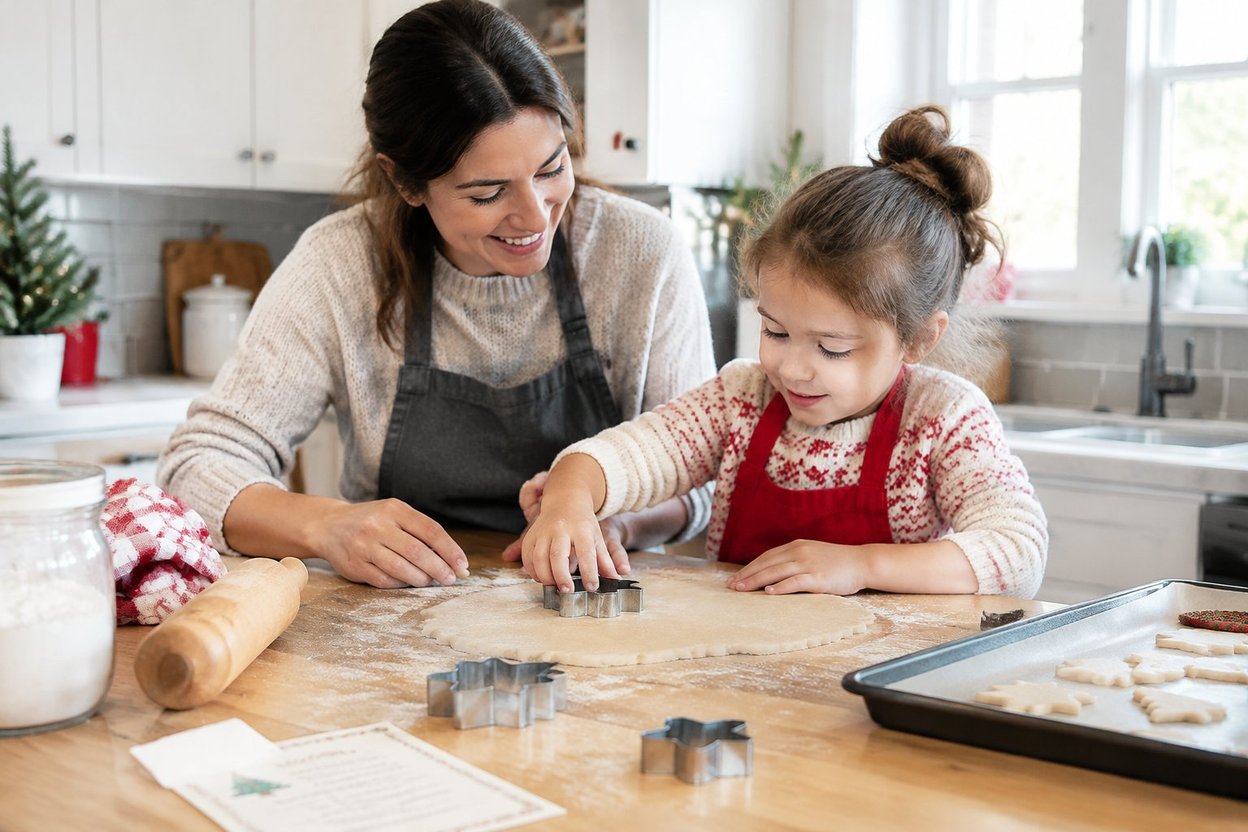
Your child is licking batter off a spoon, or helping you hang the paper turkey that comes out every November, and asks: "Can we do this at Dad's too?" or "Can I take this to Mom's?" You may feel a small pang. The answer is still yes. Welcome the wish, then find a way to make it work. Check with the other parent before you promise anything that involves their home, and don't ask your child to carry that question for you. Here is how to do it while keeping your own feelings in check and keeping your child out of the middle.
Your child wants something good to happen in both homes, and that is a healthy thing. Pediatric guidance for separated families says children should be free to love both parents and enjoy time with each of them, without guilt or pressure to pick a side. Holiday advice from the Child Mind Institute goes further. It says to choose cooperation over competition, and to tell children plainly that it's fine to enjoy a celebration when you aren't there.
So say it plainly:
> "I'm glad you enjoy that tradition. Let's see how you can enjoy it there too."
That sentence is warm, and it doesn't promise anything. It tells your child the wish is welcome without committing the other household to something it hasn't agreed to.
Before you go further, sort out what kind of request this is. Sharing a recipe, a song or an activity costs you nothing. The cookies can be baked in two kitchens. Moving one particular treasured object is different, like the ornament from your grandmother or the hand-stitched stocking. Both requests deserve a kind answer, but they need different plans.
Before you plan anything, ask:
> "Which part would you like to do there?"
The answer may surprise you. "The pumpkin thing" could mean the carving, the roasted seeds, the scary-movie night afterward, or the way the whole evening goes in the same order every year. For some children it's the food. For others it's a story, a playlist, one decoration, or simply knowing what comes next. Once you know which part matters, it's usually easier to share than you expected.
Leave room for sadness, too. Holiday guidance notes that children can feel real loss when traditions change, and they should be allowed to show sadness, disappointment, worry or anger. You might say:
> "You can miss how things used to be and still enjoy what we do now."
Don't read the request as a verdict on either home. A child who wants the cookies at the other house isn't rejecting you, and isn't saying the other house is lacking. Usually they just want something familiar.
Listening to how your child feels is not the same as asking them to settle things. If you and the other parent disagree about traditions, that is a conversation for the two of you, in private.
Most traditions can be shared without anything changing hands. Some options:
Keep repeatable things separate from irreplaceable ones. A batch of cookies can be made again. A fragile heirloom can't. If your child wants to take something delicate, you can keep the original safe at home and offer a photo of it, or a similar decoration that can travel. Present this as looking after something precious, not as a rule about who owns what.
If an item does travel, make the plan simple and agree on it ahead of time:
One caution. Pediatric guidance says familiar comfort objects can reassure young children, and that keeping favorite bedtime books, toys or music in both homes avoids trouble over forgotten items. That supports keeping things familiar. It doesn't mean every holiday object has to travel. Often a second copy works better than one item going back and forth.
Holiday advice keeps repeating two points: plan ahead, and talk about traditions directly with the other parent, not through your child. With Thanksgiving on November 26 this year, now is a good time to start.
Keep the message short and leave the other parent room to say no or to do it differently:
> "They asked to make our holiday cookies at your house. Would you like the recipe? There's no need to do it exactly as we do."
The message names the request, offers help, and makes no demands. The other home may use a different oven, frosting or day of the week, and that's fine. Your child mostly wants the tradition to exist there, not a perfect copy of yours.
Keep your child out of the back-and-forth. Don't ask them to pass along the question, report how it went, or argue your side. From years around family court, we know children see more of the tension between their parents than adults want to admit. A small request shouldn't become another thing they have to manage.
A recipe is not a schedule change. If the request grows into something like "Can I be at your house Thanksgiving morning to make the pie?", it touches parenting time, and that's a separate matter. Check your order first. The rules vary. In California, for example, the San Mateo County court's self-help guidance says parents who can't agree on a parenting plan usually need to ask the court for an order. Other states handle holiday changes and disputes in their own ways, so check your own state's rules or ask for local guidance before changing time.
You may feel this more than you expected. Parents grieve changed traditions too. Watching a ritual you built leave for another kitchen can hurt, even when you're the one who offered the recipe. That's normal. Your child just shouldn't be the one who has to deal with it.
Line up your own support. Holiday guidance suggests making your own plans for the time your children are away. Have dinner with friends, call someone who will listen, or start something of your own. An empty Thanksgiving afternoon is easier to get through when it's already planned.
The other household may say no. They may have their own traditions, little room in the schedule, or reasons they don't share. If that happens, answer calmly and without blame: To see the whole year at once, build a calendar that merges your parenting schedule with your school's calendar.
> "That won't work there this time. We can still enjoy it here."
Don't add commentary or sigh, and don't say "Of course they said no." Your child will hear the tone more than the words.
Don't promise that both homes will celebrate the same way. They won't, and a promise like that sets your child up to be disappointed.
Sharing a tradition also doesn't mean celebrating together. Guidance from the Child Mind Institute and others recommends joint celebrations only when parents can be together comfortably, without tension or conflict around the children. If sitting at the same table would put your child in the middle of strain, a shared recipe in two separate kitchens is the kinder choice.
After the holiday, check in lightly. Ask over breakfast or in the car rather than as an interview:
Use the answers to shape the next holiday. Aim for a mix of familiar and new, not a contest over which home does it better. Guidance for separated families supports building new traditions while keeping everyday routines predictable. Regular bedtimes, school mornings and the usual rhythm of the week matter as much as the holiday itself.
Most of the time, wanting a tradition in both homes is just a child wanting what they love to be in more than one place. If your child keeps having trouble sleeping or settling in after the change, mention it to their pediatrician. Pediatric guidance specifically points to persistent sleep problems after separation as a reason to check in. A wish to bake cookies in two kitchens isn't a symptom of anything.
Helps parents comfort a child who misses the other parent at Christmas, with words to use, a plan for calls, and ways to enjoy both homes.
Practical steps for helping your child pick a holiday gift for their other parent, plus what to avoid so your child stays out of the middle.
How to ask your co-parent to split a big holiday gift, set a budget, divide the cost fairly, and keep your child out of the middle.