
Parenting Time & Schedules
Snow Days and Early Dismissals: Which House Does Your Child Go To
Snow days and early dismissals can disrupt custody time. Learn the default rule, how to cover closures, and what to put in your plan.
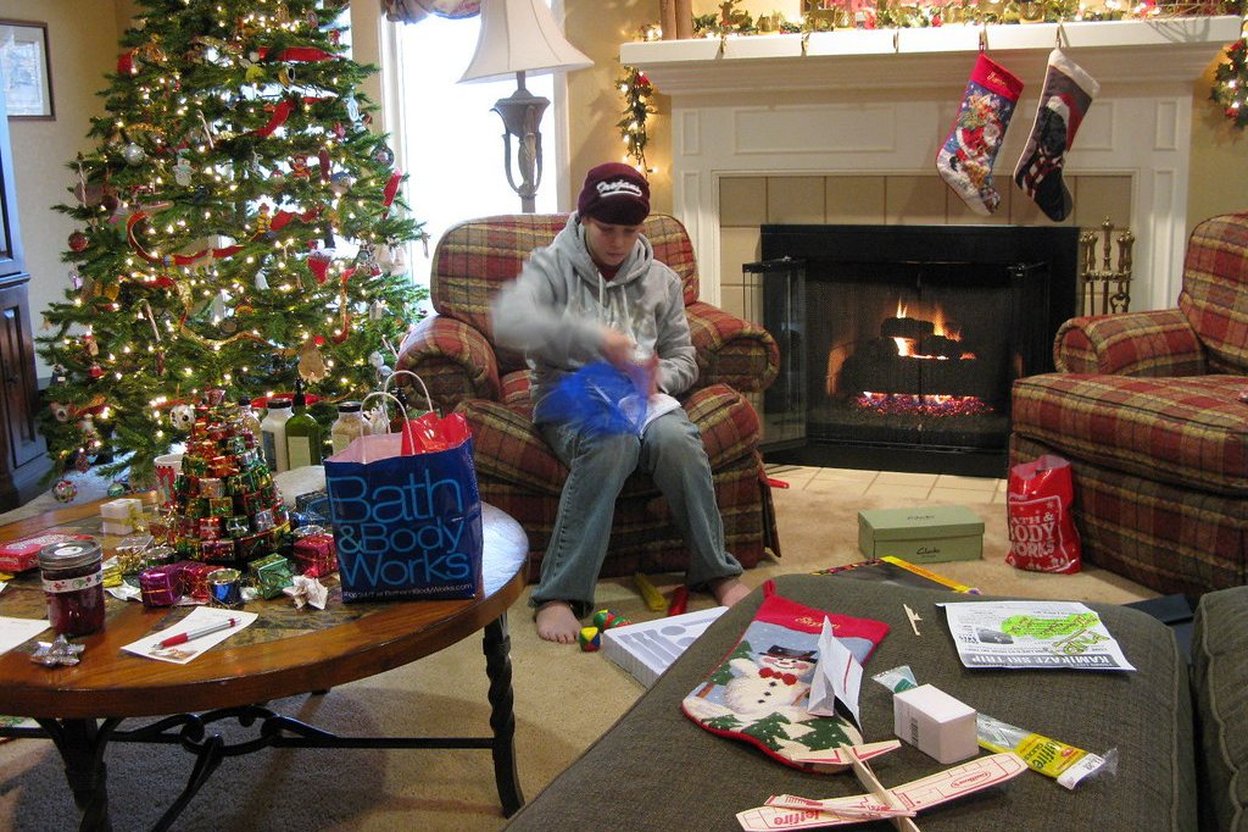
Christmas morning in two homes: how to check your custody order, the four common ways families split the holiday, and how to keep the handoff calm.
Best for the Children Editorial·8 min read·October 28, 2026
It's October. The stores already have the lights out, and your child has asked whose house they'll be at on Christmas. You aren't sure, so you said "we'll see." For most families the answer is in the holiday section of the parenting plan or court order. If that section is missing or says nothing about Christmas, your regular schedule decides it. Below we cover how to check which applies to you, the usual ways families split the day, and how to make Christmas morning feel like Christmas to your child.
Open your parenting plan or custody order and look for a heading like "holidays" or "holiday schedule." In most plans the holiday schedule overrides the regular week-to-week schedule. If the order gives Christmas Eve to one parent, it doesn't matter whose weekend it would normally be.
If there's no order, or it says nothing about Christmas, the regular schedule usually applies. In Florida, for example, a plan with no Christmas section leaves the child with whichever parent normally has December 25 that year. Neither parent gets Christmas automatically.
If you both want something different this year, you can usually agree to a one-time change. Put it in writing, even as a text or email, with dates and times. Saying "sure, take them Christmas morning" out loud is how families end up in a dispute in January.
If the schedule no longer fits your life, a one-time agreement won't fix it. The usual route is to ask the court to clarify or modify the plan.
How orders are worded, and how courts read them, differs from state to state and sometimes from county to county. Read your own order closely and check your state's rules. Doing it now, before Thanksgiving on November 26, leaves time to settle any confusion calmly.
Most plans use one of these four approaches or a mix of them.
1. Alternating years. One parent has Christmas in even years and the other in odd years. Some plans alternate the whole winter break. Others alternate a shorter block. One Colorado guide describes a 48-hour block from noon on December 24 to noon on December 26, which lets each family travel or go to services without a rushed handoff. Alternating fits parents who live far apart. The downside is real: each parent goes a full year without Christmas morning.
2. A fixed Eve/Day split. One parent always has Christmas Eve through mid-morning Christmas Day, and the other always has the rest of Christmas Day. Nothing alternates, so everyone knows what to expect each year. It works when parents live close together and their family traditions already divide that way. It breaks down when a Christmas-morning drive is long.
3. Splitting the break in halves. One parent has the first half of winter break, often through a set time on Christmas Day, and the other has the second half. The halves switch each year. This suits families who live far apart, because each half is long enough to be a real visit. A common Florida version gives one parent Christmas Eve through Christmas morning and the other parent Christmas afternoon onward, switching each year, with exchanges around noon, 2 p.m., or 3 p.m.
4. Splitting Christmas Day itself. For example, 8 a.m. to 2 p.m. with one parent and 2 p.m. to 8 p.m. with the other. The Colorado guide says this generally suits parents who live about 30 to 60 minutes apart, and that courts generally disfavor it for children under 5 because of the stress of extra transitions.
To choose, weigh three things: how far apart you live, how old your child is, and how many exchanges the day will need. Each extra handoff is one more goodbye for your child.
Children usually remember how the handoff felt more than which morning they spent where. Transitions between homes are among the most stressful parts of life after divorce for children, so plan the rest of the day around them.
In our years around family court we have heard what children say about holidays. They know their parents don't hug anymore. They notice who is tense at the door and who stayed in the car. You can't hide the separation from them. What you can do is keep the conflict away from them and leave Christmas to them.
Most Christmas fights come from vague wording. "Christmas afternoon" can mean noon to one parent and 4 p.m. to the other. If you're writing a first plan or revising one, be precise:
If the plan isn't working, there are three steps, roughly in order of cost:
Don't take matters into your own hands. Keeping your child past an exchange time, or refusing to hand them over because you think the other parent doesn't deserve Christmas, can backfire. Depending on the state, courts can order make-up time, award attorney's fees, or hold a parent in contempt, and penalties can grow for repeat violations. If the other parent keeps breaking the schedule, write down each incident with dates and times and use your state's enforcement process.
The schedule tells you where your child wakes up on Christmas. Whether the day goes well depends mostly on how calm the handoff is, which is up to both of you.
Photo: Christmas Morn' by OakleyOriginals, BY 2.0.
Snow days and early dismissals can disrupt custody time. Learn the default rule, how to cover closures, and what to put in your plan.
Learn when a canceled visit earns makeup parenting time, how state rules differ, and how to ask in writing, plus what to do if the answer is no.
Your concert falls on the other parent's night. Learn how to read your order, ask early in writing, and keep your child out of the middle.