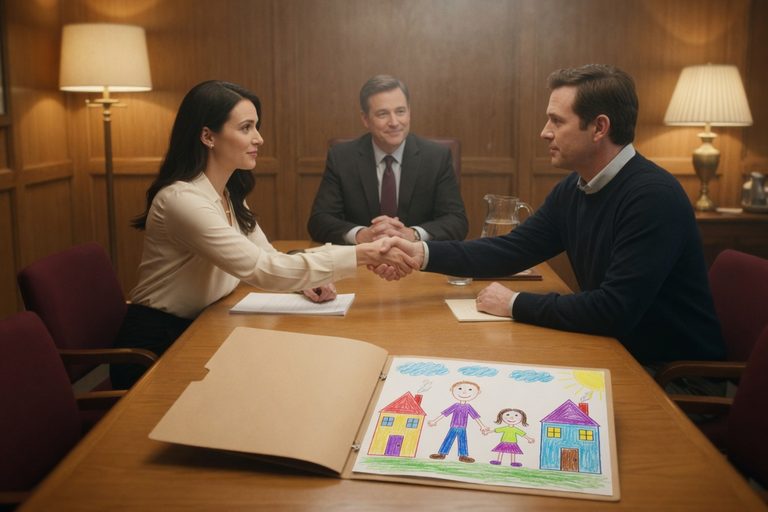
Mediation & Settling Outside Court
When Mediation Doesn’t Settle: What the Child Needs Next
Sometimes both parents show up, talk for hours, and still walk out without a signed plan. That is not a personal failure and it is not a signal to put the
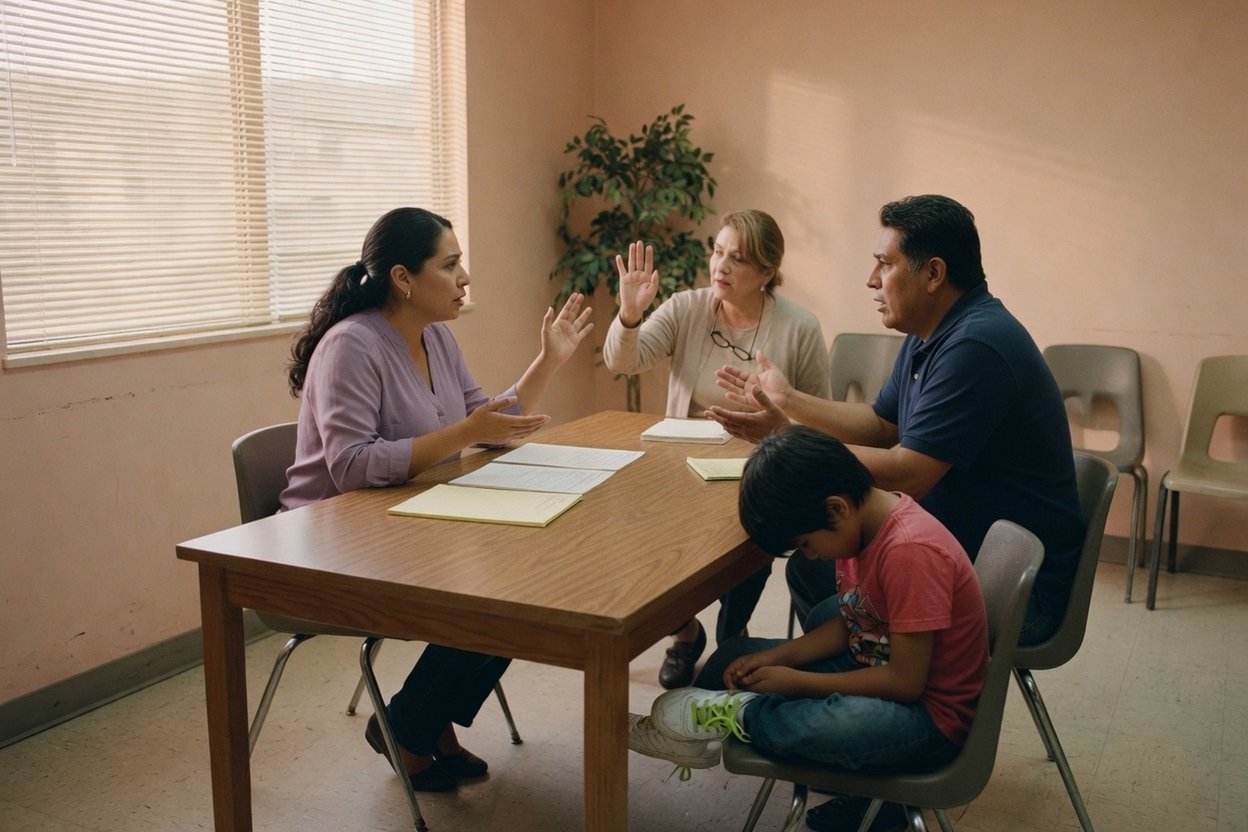
Should your child sit in on custody mediation? Why the room is built for adults, how a child's voice can be heard safely, and what to tell them afterward.
Best for the Children Editorial·4 min read·September 29, 2026
Some parents want the child in the mediation room so the mediator can “hear it from them.” Some children ask to come because they think they can stop the fighting. Both instincts come from love. Both can put a child in a seat they cannot leave without picking a side.
Mediation is two parents, a third person, and a pile of calendar problems. That is adult work. A child sitting through “who gets Christmas morning” is not being included. They are being asked to watch the people they love argue about them in real time.
If you need a child-first list of what to settle, start with what kids need you to agree on in mediation. That list does not require the child in the chair.
Take the ask seriously and still protect the seat. You can say: “This meeting is for the adults to write the week. You do not have to pick. I will tell you the plan in plain words after.” That is respect without a ballot.
If they are scared the other parent will “win,” name the fear without feeding it. The job of mediation is a livable week, not a verdict on who is the better parent. See how to talk with kids about two homes.
Some processes use a child specialist, a brief interview, or a drawing of the week — not a seat at the bargaining table. That is different from having them listen to money, dating, and old fights. If someone proposes “bring them in for ten minutes,” ask what the child will be asked, who will be in the room, and how you will explain it afterward without a debrief that sounds like a cross-examination.
If sitting in one room is already too hot for the adults, do not add a child. Use shuttle mediation or keep the child completely out of the building.
Leaving a child in the lobby with a tablet while voices leak through the door is still putting them next to the conflict. Bring a trusted adult who is not in the case, or do not bring them to the site at all. A missed school day plus a tense hallway is a heavy price for “they were nearby.”
Short and true. “We worked on the calendar. School stays the same. You will be at each house on these days.” Do not recap who caved. Do not ask which plan they like better if the adults already signed. If you did not settle, do not send them in as a messenger. See when mediation doesn’t settle and stop using your child as a messenger.
Prepare the file without preparing a speech for them to deliver. Preparing for mediation is calendars, sick-day plans, and school times — adult paper.
If a child is unsafe, that is not a reason to sit them in mediation to prove it. That is a reason for counsel, a different process, and a plan that does not make them narrate the danger to a parent who caused it. A mediator is not a detective and not a therapist.
If you already brought them once and it went badly, you can still change the pattern. You do not owe a repeat performance because “they came last time.” Tell them the next meeting is adults only, and keep the promise. A child who sat through one session does not need a second to prove they are brave.
This is educational information, not legal advice. Whether a child may attend, be interviewed, or stay in a waiting room depends on your state, the mediator, and your facts. Ask a licensed attorney where you live before you bring a child to a session or promise them they will get a vote.
This site is not a law firm and this is not legal advice. A child can have a voice in their life without a seat at a table built for people who can sign a contract. Keep them out of the room unless a professional where you live has a specific, limited, child-safe reason to hear them — and even then, do not make them watch the fight.
Sometimes both parents show up, talk for hours, and still walk out without a signed plan. That is not a personal failure and it is not a signal to put the
Separate rooms, a mediator walking between you, a written plan the child can live with. For families who cannot share a table.
Settle the child’s week first — school, doctors, bedtime, holidays, how you will talk — before you fight over legal labels.