Mediation & Settling Outside Court
Should Your Child Sit In on Mediation?
Should your child sit in on custody mediation? Why the room is built for adults, how a child's voice can be heard safely, and what to tell them afterward.
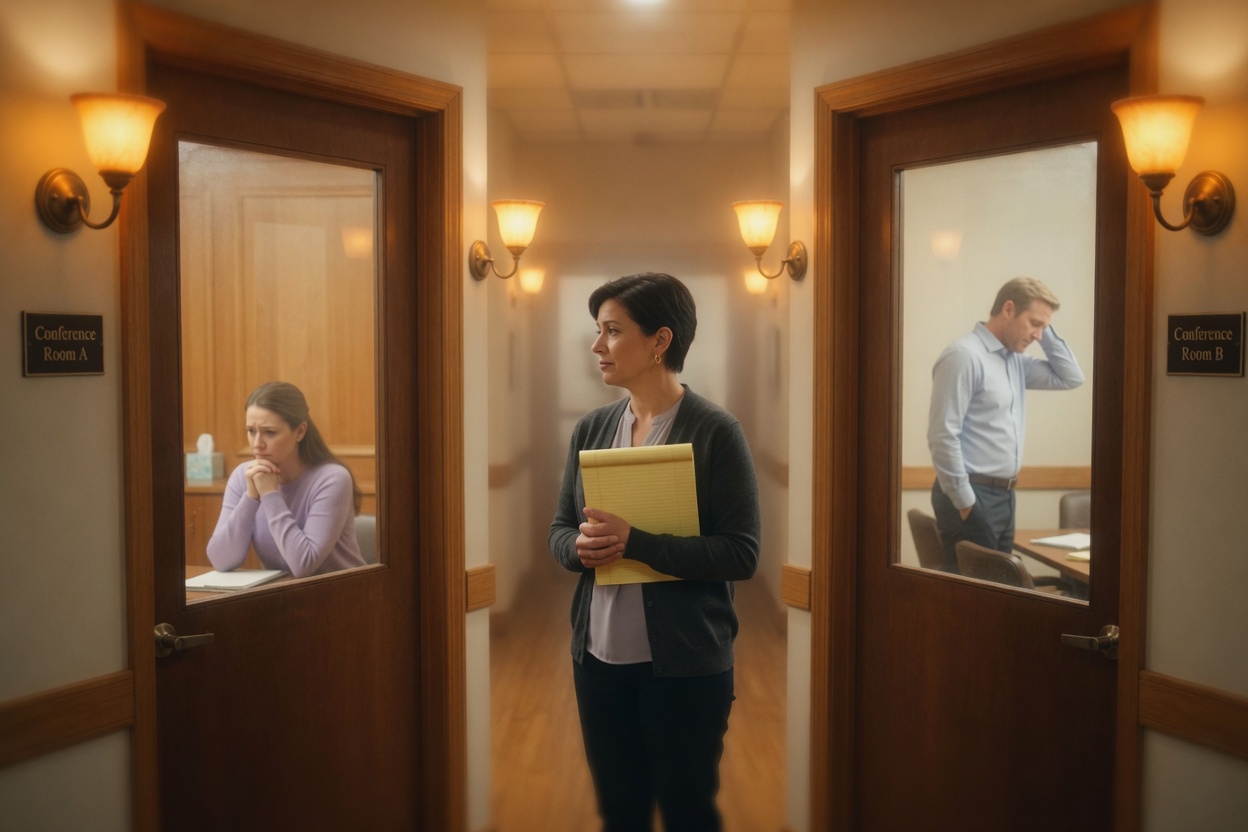
Separate rooms, a mediator walking between you, a written plan the child can live with. For families who cannot share a table.
Best for the Children Editorial·5 min read·September 9, 2026
Standard mediation puts both parents at one table. That works when you can sit eight feet apart without the child becoming the subject of a cross-examination. Plenty of families cannot. A restraining order, a history of intimidation, or a parent who uses every pause as a speech — those are reasons to change the room, not reasons to skip settlement and go straight to a hearing.
You arrive, often at staggered times. Each of you sits with the mediator alone. The mediator carries proposals, questions, and draft language back and forth. You can say no without performing it in front of the other parent. The child is not in the building.
It is slower than a joint session. It is also how some people reach an agreement they could not reach in a shouting match. If the alternative is a trial, slower is not a failure.
Ask for it by name when you schedule. Do not assume the mediator will notice you are scared. How to prepare for mediation still applies: calendar, school info, a list of what the child needs this month. Shuttle only changes who is in the room. For what belongs in the plan itself, see what kids need you to agree on in mediation.
High conflict is not a personality type. It is a pattern the child is already paying for. Protecting children during emotional abuse and parallel parenting are the day-to-day side. Shuttle is how you might get a written plan without rehearsing that conflict in a conference room.
Shuttle does not make a dangerous person safe. It does not replace a lawyer, a protection order, or a supervised exchange. If you are being pressured to “just agree” so the session can end, that is a reason to stop, not a reason to sign. You can say: I am not signing today. I need to read this with my attorney.
Mediators are not judges. They cannot force a deal. They also cannot be your advocate. A mediator does not have to be a lawyer, and even when they are, they do not represent you. If the draft only works if you disappear, it is not a child-first plan.
Speak in facts the child would recognize:
Do not send the mediator in with a speech about the other parent’s character. They already know you do not like each other. Character speeches waste the only person who can carry a number from one room to the other. Write the number down. Let them carry the number.
Bring a short list of must-haves for the child and a longer list of things you can flex. If everything is a must-have, you are not mediating. You are waiting for a judge. That is allowed. It is also slower, more expensive, and harder on kids. See mediation versus going to court.
Do not ask the child which room they want you to sit in. Do not debrief them after: “Tell me what Dad said to the mediator.” Do not send them in with a note. Shuttle exists so the adults can be apart. Using the child as the shuttle defeats the design.
After a deal, tell the child the schedule in matching, short sentences. Not the history. Not who “won.” Talking with kids about two homes is the tone. If they refuse a transition later, handle the door — do not reopen the whole war through them.
Cost and no-shows still matter. What mediation costs and what happens if you miss it are the logistics. Shuttle does not make those problems disappear. It only changes the seating chart.
Shuttle mediation (sometimes called caucus mediation) keeps you in separate rooms. The mediator walks between you. You do not have to look at each other. You still try to write a plan the child can live with. This is educational, not legal advice. Whether shuttle is offered, required, or a bad idea in your case depends on your state, the program, and your safety facts.
This site is not a law firm. If you are unsafe, tell the mediator and your attorney before the session, not after someone is already in the hallway.
Should your child sit in on custody mediation? Why the room is built for adults, how a child's voice can be heard safely, and what to tell them afterward.
Sometimes both parents show up, talk for hours, and still walk out without a signed plan. That is not a personal failure and it is not a signal to put the
Settle the child’s week first — school, doctors, bedtime, holidays, how you will talk — before you fight over legal labels.