
Putting Children First
When Your Child Comes Home Angry and Needs a Couple of Days to Settle
Learn how to give your child a calm landing after a hard handoff, when a day or two of settling is normal, and when to seek professional help.
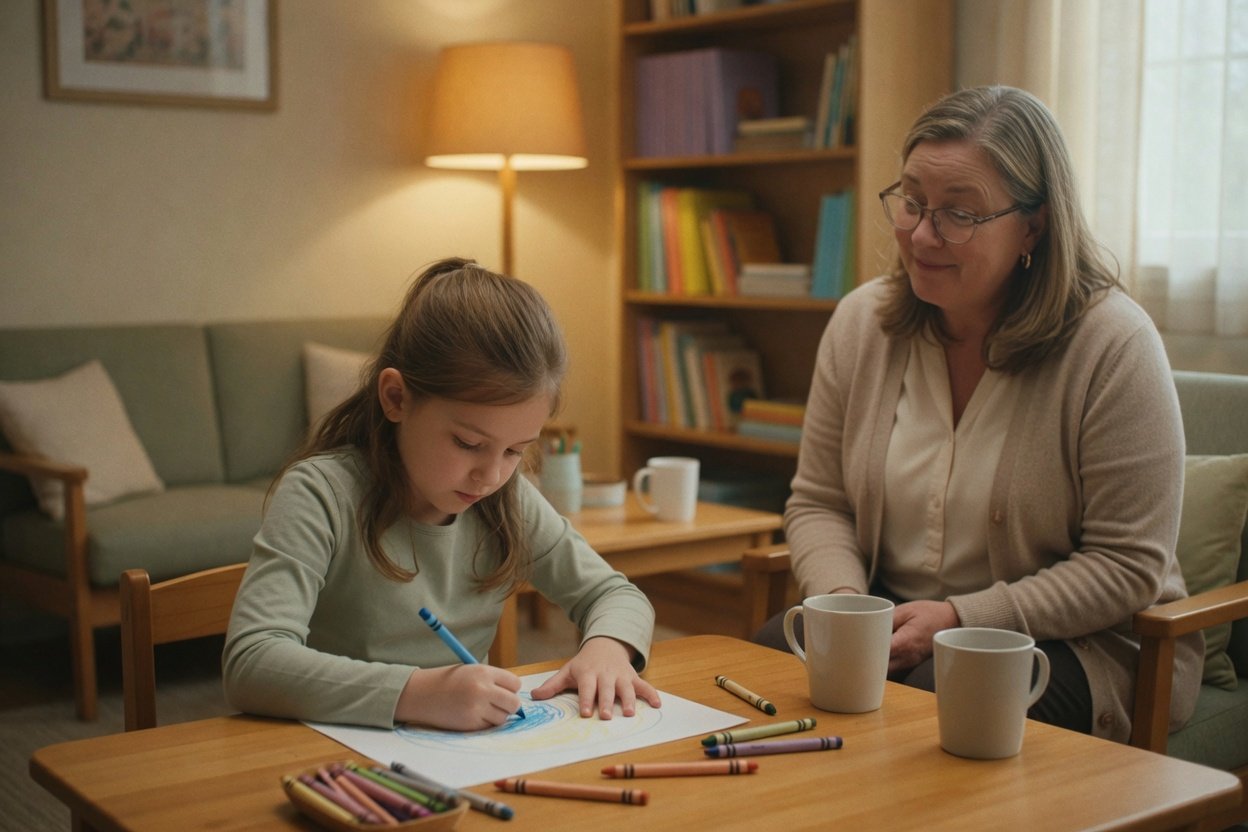
A child in therapy during a custody fight needs a safe room. What parents can ask, what stays private, and why the therapist is not a witness you get to recruit.
Best for the Children Editorial·4 min read·October 8, 2026
Your child is having a hard time, and someone suggested a therapist. Good. Now the questions start. Can I sit in? Can I read the notes? Will she tell the judge what I said? Can the other parent stop her? These are fair questions, and they have different answers in different places. Underneath them is one thing every parent should hold on to: a child’s therapy only helps if the child feels it is hers.
If you take your child to a therapist to build a case, the child will feel it. She will hold back, and the therapist may step out of the case altogether. Many therapists say up front that they will not give opinions on custody. That is normal, and it is good for the child. A therapist’s job is to help the child, not to pick a winner.
Courts sometimes appoint a separate professional to evaluate the family or represent the child’s interests. That is a different role. What a guardian ad litem does explains it.
In many places, major decisions such as mental health treatment are shared between legal parents unless the order says otherwise. Some parents can consent alone. Some need both. Some orders name who chooses the provider. Read yours. If you and the other parent disagree, try to talk about it as adults, or through a mediator, before anyone books an appointment that turns into a fight. If it is stuck, an attorney can tell you how it works in your state.
Do not hide therapy from the other parent unless you have been advised to, and never tell the child to keep it secret from a parent. A secret is a heavy thing to carry.
A child’s therapy has some privacy built in. The therapist may share general information, such as whether the child is coming and how she seems, but not everything she says. That privacy is what makes it safe for a child to talk. If you ask for details, the therapist will likely say no, and it can make you look like you are trying to control the room.
Instead ask: “What can I do at home to help?” “How can we handle Sunday nights?” “Is there anything you would like both of us to do the same?” Those are questions therapists like to answer.
“What did you talk about?” is the fastest way to end a child’s willingness to talk. If she wants to share, let her. If she does not, let it go. When the other parent questions your child after every visit applies just as well to the drive home from therapy.
If she tells you something that worries you (hurting herself, being hurt, being frightened), take it seriously and bring it to the therapist and, if needed, to a professional. That is different from asking for a play-by-play.
Records of a child’s therapy can sometimes be sought in court, and courts weigh privacy and the child’s best interest. Whether yours can be depends on your state and the circumstances. See can medical records be used in custody cases for the general picture. If you are worried, ask an attorney before you sign a release.
Therapy works best when it is regular, on the calendar, and not treated as a punishment or a weapon. Agree on who takes her and who pays, and put it in writing. If the child asks whether you are okay with her going, say yes and mean it: “I am glad you have someone to talk to.” That sentence can mean a lot.
If your child is younger, how play helps children process separation may help you see why a therapist might use toys and drawing.
If either parent starts calling the therapist to complain about the other, or sending long emails, the therapist may step back. Keep your contact short and about the child’s needs. If you need to talk about your own stress, get your own therapist. Handling stress during a custody case has more.
This is educational information, not legal advice. Who can consent to therapy, who can see records, and whether a therapist can be called in court all depend on your state, your order, and the therapist’s policies. Ask a licensed attorney where you live before you rely on any of this.
This site is not a law firm and this is not legal advice. A child in a quiet room with someone who is on her side. Protect that.
Learn how to give your child a calm landing after a hard handoff, when a day or two of settling is normal, and when to seek professional help.
The first report card of the year can start a blame game between homes. How to share school information, set up homework in two houses, and keep grades from becoming evidence.
Learn what to tell your child when each home has different candy rules, plus shared safety steps and a plan to agree on with your co-parent.